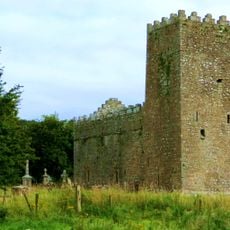
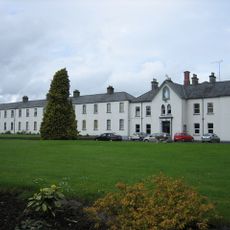
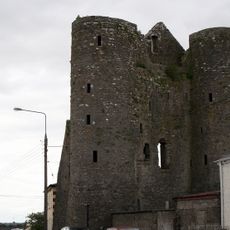
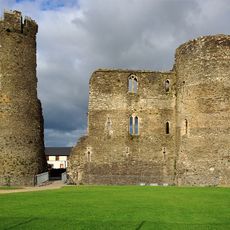
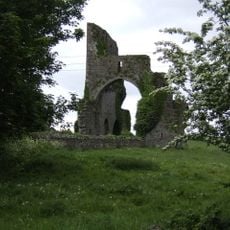
Fore Priory of Sts Taurin and Fechin, Benedictine priory and national monument in County Westmeath, Ireland.
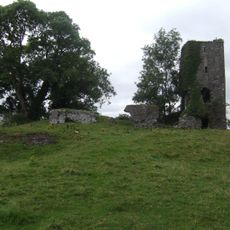
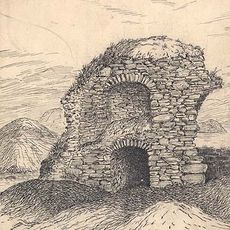
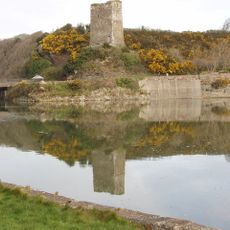
Fore Priory is a Benedictine monastery and national monument in a valley in County Westmeath, featuring preserved stone walls of towers and an arcaded cloister from medieval times. The ruins display the layout and structure of the original religious community, with key buildings scattered across the site.
Saint Féichín founded a monastery here in 630, which was burned twelve times between 771 and 1169 by Viking and O'Reilly raiders. Around 1200 Hugh de Lacy re-founded it as a Benedictine cell of the Abbey of Évreux, dedicated to Féichín and Taurin. The community was dissolved in 1539, yet anchorites still occupied the site into the 17th century.
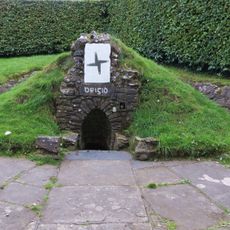
The name Fore comes from the Irish Fobhair, "water-springs", after St Féichín's well beside the 7th-century old church. Pilgrims still leave coins in the three-branched tree known as the copper tree, and the Seven Wonders of Fore are recounted locally, from the mill without a race to the water that does not boil in the saint's well.
The site is best explored on foot by following walking trails that connect the various structures and religious monuments scattered across the landscape. Sturdy footwear and weatherproof clothing are recommended since the trails cross uneven ground and open countryside.
Locals list seven wonders at Fore, among them a mill with no visible water supply, fed by water sinking from Lough Lene and rising again through the ground, and a tree whose wood will not burn, in which pilgrims lodge coins, hence its name the copper tree. The other wonders include water that flows uphill and a well whose water does not boil.
The community of curious travelers
AroundUs brings together thousands of curated places, local tips, and hidden gems, enriched daily by 92,570 contributors worldwide.