Creggankeel Fort, stone fort and early Christian site on Inis Oírr, County Galway, Ireland
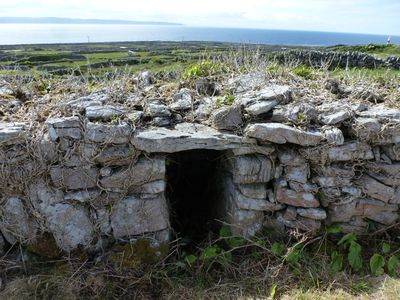
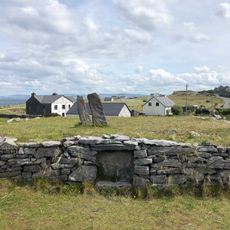
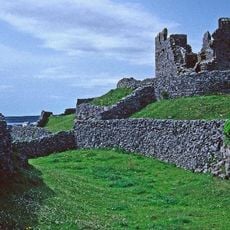
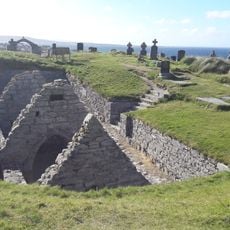
Creggankeel Fort stands on Inis Oírr's eastern side above An Loch Mór, the island's only freshwater lake. It consists of two square drystone walls and a pillar-stone bearing an inscribed cross. Beside it, the Grave of the Seven Daughters forms an incomplete cashel circuit with sleeping niches set into the walls, and foundations of other buildings are visible.
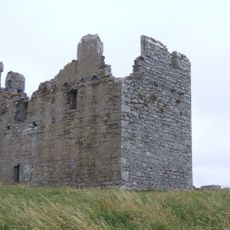
Creggankeel is a cashel, a type of stone fort mostly built in Ireland after the 1st century BC. Its walls were later reused in the 15th century as part of the outer walls of O'Brien's Castle. The Grave of the Seven Daughters, an early Christian site linked to the female saint Moninne, was established around the 5th or 6th century AD.
The name Creggankeel comes from the Irish creagáin chaoil, "narrow stony place." The early Christian burial ground here is called Cill na Seacht nIníon, the Grave of the Seven Daughters, and also An Chill Bheannaithe, the blessed graveyard; it is linked to the female saint Moninne. Its walls hold sleeping niches likened to the Roman catacombs.
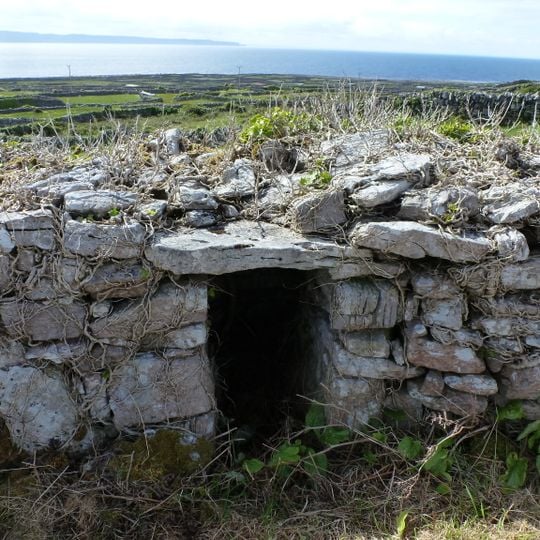
Creggankeel Fort lies in the eastern part of Inis Oírr, above An Loch Mór, the island's only freshwater lake. The remains are low drystone walls of flat grey limestone, with a lintelled opening and a pillar-stone bearing a cross; ground is bare cracked rock, so watch your footing. Access is on foot across open fields; island weather shifts quickly, so carry rain gear.
The fort's walls, not its foundations, were reused in the 15th century as part of the outer walls of O'Brien's Castle. The site also holds the Grave of the Seven Daughters, an early Christian burial ground linked to Saint Moninne, whose walls contain sleeping niches compared to the Roman catacombs.
The community of curious travelers
AroundUs brings together thousands of curated places, local tips, and hidden gems, enriched daily by 92,639 contributors worldwide.