Tombs of the Kings, Ancient burial complex in East Jerusalem, Israel
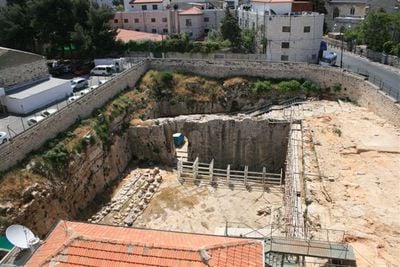
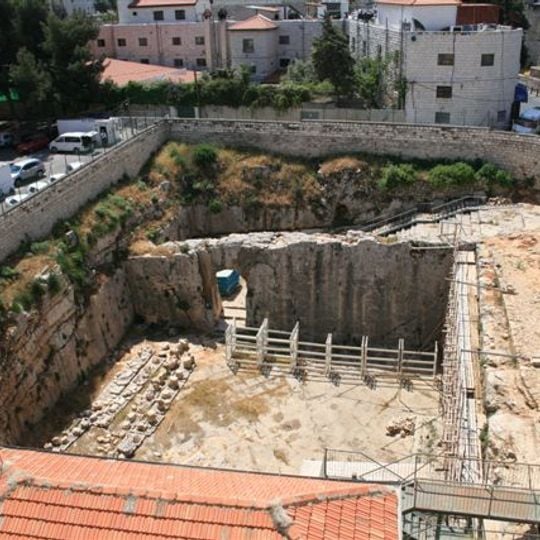
The Tombs of the Kings is an underground burial complex with eight interconnected chambers containing 48 niches carved into limestone bedrock. Entry is through a nine-meter-wide staircase that descends to a courtyard roughly 27 by 26 meters, also carved directly from the stone.
Queen Helena of Adiabene ordered the site built around 50 to 56 CE as the burial place for her family. It was constructed during the Second Temple period, when the region was shaped by multiple cultural influences.
The name Tombs of the Kings comes from the mistaken belief that the site held the kings of Judah; the gate still reads "Tombeau des Rois". The complex mixes kokhim, Jewish-style burial niches, with arcosolia, Roman-style arched benches, and its Doric frieze carries a bunch of grapes and acanthus wreaths. Aramaic and Syriac inscriptions, such as Tzada Malchata on a limestone sarcophagus, reflect the local languages of the Second Temple period.
The burial chambers themselves are closed to visitors, so the visit covers the rock-cut courtyard, the 9-metre-wide monumental staircase and the ritual baths fed by channels cut along its right side. The modern metal stair on the left is kept for emergencies. The site lies on Saladin Street near the Nablus Road junction, and renovation work has repeatedly interrupted access, so check opening before setting out.
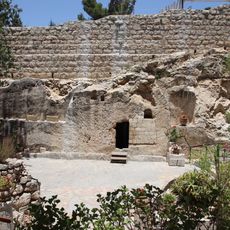
The burial site employed a sophisticated water pressure mechanism to move a large rolling stone that sealed the entrance. This engineering achievement reveals how advanced technical skills were in the ancient world.
The community of curious travelers
AroundUs brings together thousands of curated places, local tips, and hidden gems, enriched daily by 92,819 contributors worldwide.