Garden Tomb, Burial plot near Damascus Gate, Jerusalem, Israel
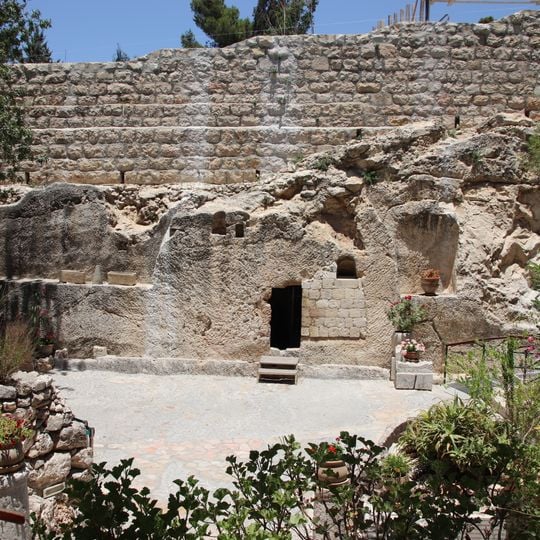
The Garden Tomb is a rock-cut burial chamber within a maintained garden near Damascus Gate in Jerusalem. The site lies beside a hill formation whose shape resembles a human skull.
The tomb was found in 1867, a few years after scholars proposed nearby Skull Hill as Golgotha. Gabriel Barkay dates the rock-cut chamber to the 8th–7th centuries BCE, while Riccardo Lufrani places it in the Hellenistic era, 4th–2nd centuries BCE. The Garden Tomb (Jerusalem) Association, formed by evangelical Anglicans in 1885, has maintained the site since.
Protestant communities from around the world visit this site as an alternative location for the burial of Christ. The grounds serve their congregations as a space for open-air worship services and quiet reflection.
Visitors can book guided tours through the official website, as the grounds remain open throughout the year. The site closes on specific religious holidays.
The tomb was found in 1867, and the Garden Tomb (Jerusalem) Association, formed by evangelical Anglicans in 1885, has maintained the site since. The association does not claim it as the authentic tomb of Jesus, presenting it instead as a visual aid for the gospel accounts.
The community of curious travelers
AroundUs brings together thousands of curated places, local tips, and hidden gems, enriched daily by 92,604 contributors worldwide.