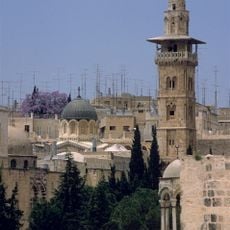
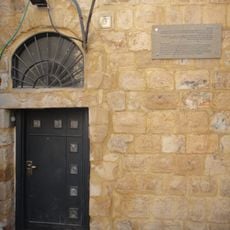
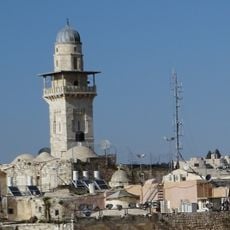
Ecce Homo, Religious complex on Via Dolorosa, Jerusalem, Israel
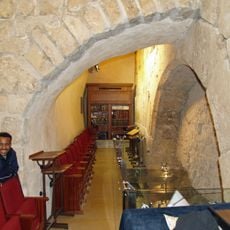
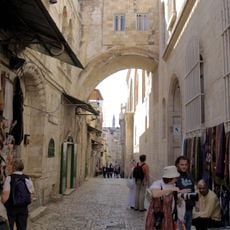
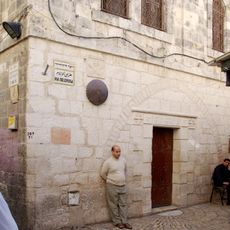
Ecce Homo is a religious complex on the Via Dolorosa featuring a basilica, convent, and remnants of an ancient Roman arch that spans across the street. The site combines different architectural periods from Roman times to today, creating a layered sacred space.
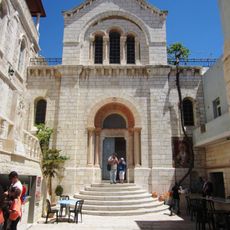
The arch is a remnant of Hadrian's triumphal arch from 135 CE, not a support for the Antonia Fortress. In the 13th century, two lithostratos slabs were set into it, giving it the name Ecce Homo Arch. The basilica and convent were built in 1864 on land bought by Alphonse Ratisbonne in 1857, and the church was made a basilica by Pope Leo XIII in 1902.
The name comes from the Latin phrase meaning 'Behold, the Man,' referring to when Jesus was presented to Pilate at this location. Today, the Sisters living here maintain spiritual practices and welcome visitors to witness their daily religious life.
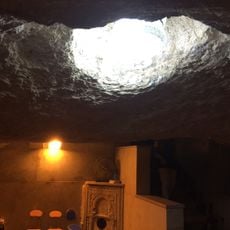
The complex is accessible via the Via Dolorosa and best explored on foot, with visitors moving through multiple levels and interconnected rooms. Sturdy shoes are recommended since the pathways are narrow and sometimes uneven.
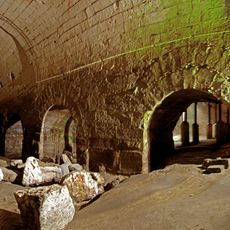
The arch embedded in the church wall is not Roman-era construction for the Antonia Fortress: it is a triumphal arch of Emperor Hadrian from 135 CE. In the 13th century two slabs of the Lithostratos were set into it, which is why it is called the Ecce Homo Arch. The pavement itself, traditionally the floor where Jesus was scourged, lies in the basilica's crypt.
The community of curious travelers
AroundUs brings together thousands of curated places, local tips, and hidden gems, enriched daily by 92,700 contributors worldwide.