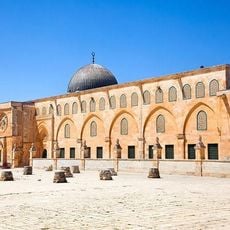
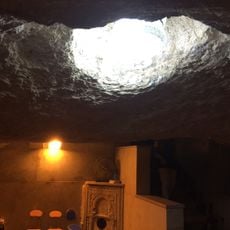
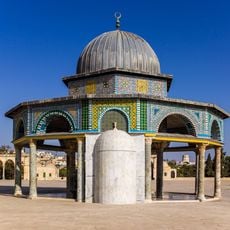
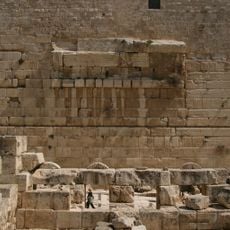
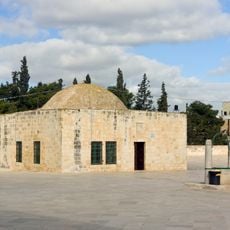
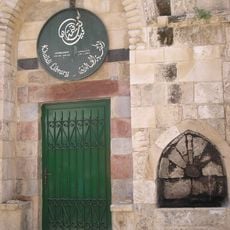
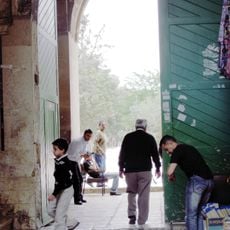
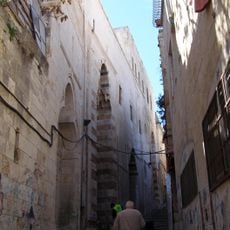
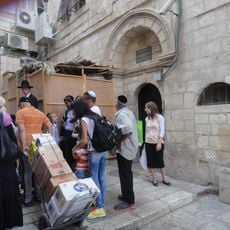
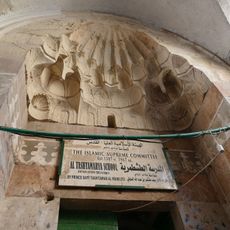
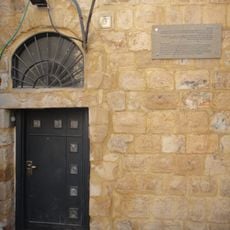
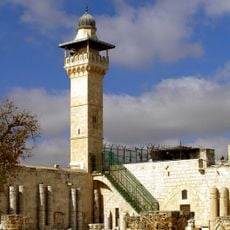
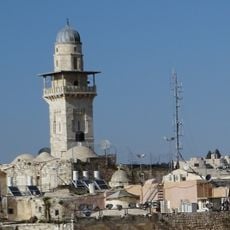
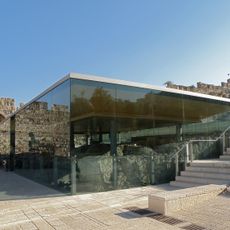
Gate of the Chain, Islamic gate entrance in Old City of Jerusalem, Palestine.
The Gate of the Chain is the southern, open half of a double gate in the Temple Mount's western wall, with rectangular doors 4.5 m high and a small single-person opening cut into one wing. Its northern twin, Bab as-Sakina, is kept closed. A broad lintel joins the two, facing a Mamluk sabīl.
The gate was renovated during the Ayyubid period around 1200 as a key entrance to the Al-Aqsa Mosque compound. This restoration solidified its role as a central connection between the sacred precinct and the surrounding city quarters.
The name comes from an iron chain once hung in the gateway: Jewish tradition marked it as the limit of permitted access to the mount, while Muslim tradition held that litigants who grasped it would be judged — the chain slipped from the guilty. The gate is also called Bab al-Mahkama, Gate of the Law Court, after the Sharia court in the Tankiziyya building next door.
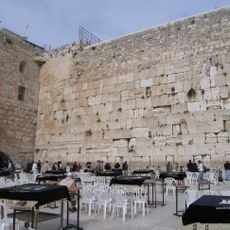
The gate is the closest exit to the Western Wall and, since the Maghriba Gate closed, the closest to the Al-Qibli Musalla hall. It is one of three gates opened alone for Isha'a and Fajr prayers since 1967. Muslim worshippers enter the compound through it; Jews ascending the Temple Mount may leave by it. The northern twin, Bab as-Sakina, stays shut except when needed.
In Islamic tradition the chain was not a shield but a test of honesty: litigants grasped it before the gate, the one in the right held on while the guilty party's hand slipped away. Jewish tradition instead marked the chain as the limit of permitted access to the mount. The northern twin, Bab as-Sakina, has been closed since at least 1345, when the historian al-Omari recorded it.
The community of curious travelers
AroundUs brings together thousands of curated places, local tips, and hidden gems, enriched daily by 92,634 contributors worldwide.