Kinneret farm, Agricultural heritage museum in Kinneret, Israel.
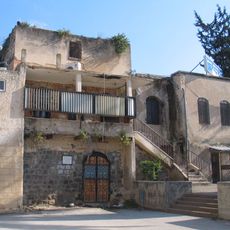
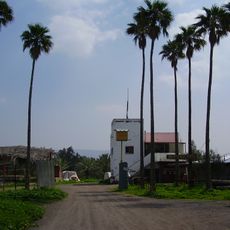
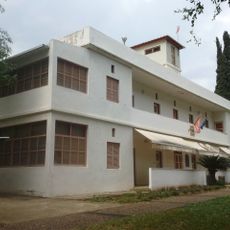
Kinneret Farm is a single-story stone building with rough grey-brown masonry walls and a low-pitched roof of reddish-orange tiles, its main section joined by a lower wing to the right. Dark rectangular windows and an open doorway sit under the eave, and a covered porch on posts runs along part of the front. A small dark wooden structure with a pitched roof on a stone base stands slightly apart to the far left.
The site was founded in 1908 as a training center for Jewish farmers experimenting with new farming methods in the region. It played a key role in developing communal settlement models like the kibbutz and moshav that shaped the country's agriculture.
The farm's Hebrew name, Havat Kinneret, was coined by the writer S.Y. Agnon, restoring the biblical name Yam Kinneret for the Sea of Galilee. The courtyard also housed the Maidens' Farm, a training farm for women founded in 1911 by Hanna Meizel Shochat, where about fifteen students learned agriculture; it closed in 1917 because of the war. The poet Rachel Bluwstein lived here between 1911 and 1913 and drew on the experience in her poems.
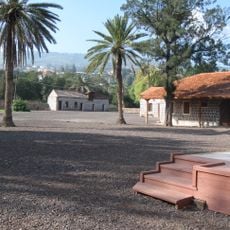
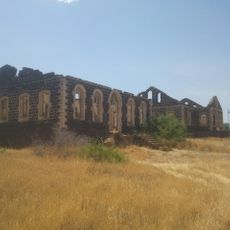
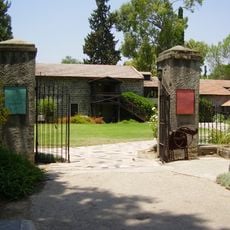
The site opened as a museum and educational centre in 2007, after restoration of the courtyard and its buildings. Visitors move between the former farm structures on foot, among them the stone barn with its tiled roof and the small wooden structure on a stone base at the edge of the yard. Allow time to walk the whole courtyard.
Women established a separate training facility on the site in 1911 and became pioneers in agricultural education for women. This facility allowed women to learn skills that were otherwise limited to men.
The community of curious travelers
AroundUs brings together thousands of curated places, local tips, and hidden gems, enriched daily by 92,641 contributors worldwide.