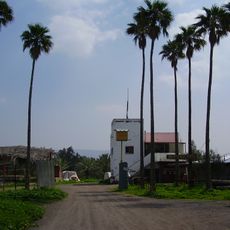
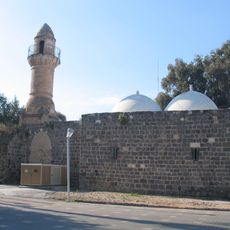
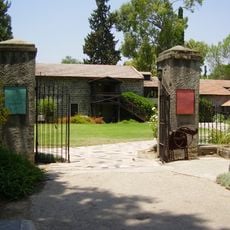
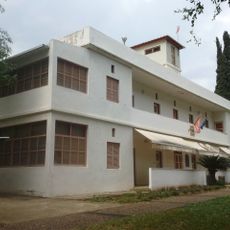
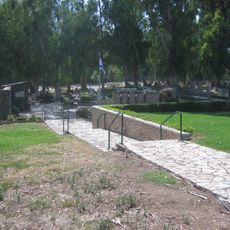
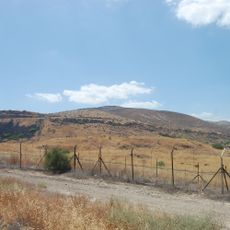
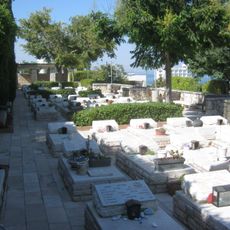
Al-Sinnabra, Archaeological site near Sea of Galilee, Israel.
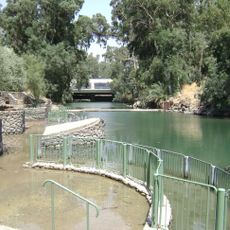
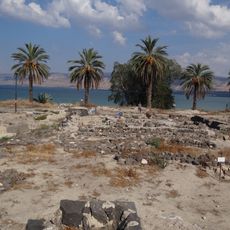
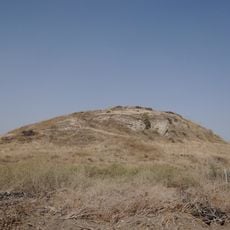
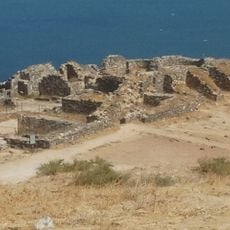
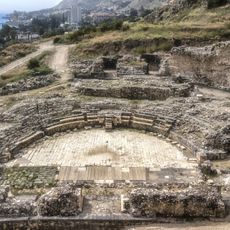
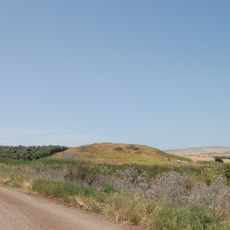
Al-Sinnabra is an archaeological site on the tell of Khirbet Kerak (Bet Yerah), where the Sea of Galilee empties into the Jordan River, about 6 km south of Tiberias. The mound rises 15 m above sea level and holds Hellenistic city walls of basalt with brick tops, alternating rectangular and round towers with spiral staircases, and houses facing the lake preserved to window-sill height.
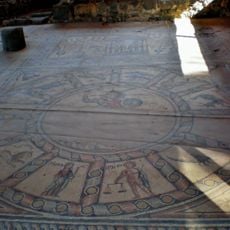
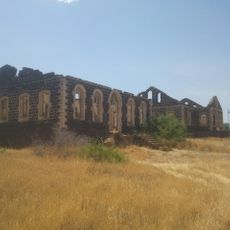
Sennabris, as the site was known in Hellenistic and Roman times, was walled and later hosted Vespasian's three legions before the assault on Tarichaea. A large church was built in 450 CE and renovated until 529 CE. Under the Umayyads a qasr served as a winter resort for caliphs Mu'awiya I and Marwan I; by the Crusader period it lay in ruins.
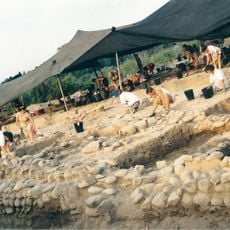
The site shows layers of occupation where different communities left their mark through buildings and structures spanning several centuries. You can see how people adapted existing spaces for their own needs, revealing patterns of daily life across different periods.
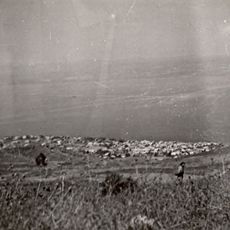
The site lies on the tell of Khirbet Kerak, about 6 km south of Tiberias, where the Sea of Galilee empties into the Jordan River, only 15 m above sea level. The excavated area is open ground with little shade, so bring sun protection and sturdy shoes. Parts of the Hellenistic walls and houses facing the lake survive to window-sill height.
Part of the palace complex was long misidentified as a Byzantine synagogue because of a column base engraved with a seven-branched candelabrum. Ronny Reich questioned this in 1993, Donald Whitcomb proposed the qasr identification in 2002, and excavations in 2010 confirmed it. The complex, built in the 7th century by Mu'awiya and Abd al-Malik, may be the earliest Umayyad complex of its kind found.
The community of curious travelers
AroundUs brings together thousands of curated places, local tips, and hidden gems, enriched daily by 92,725 contributors worldwide.