Hamat Tiberias, Archaeological site and nature reserve near Sea of Galilee, Israel
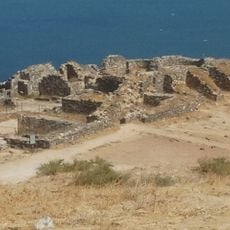
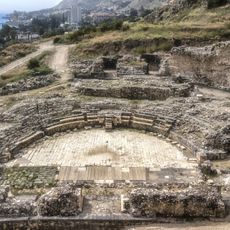
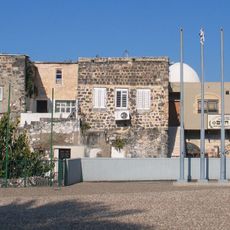
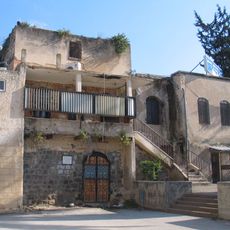
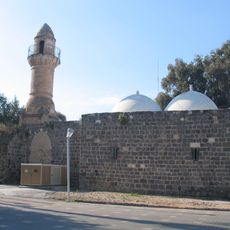
Hamat Tiberias is a protected nature and archaeological site along the western shore of the Sea of Galilee featuring natural hot springs and ancient ruins. The landscape includes multiple archaeological layers from different periods, with two ancient synagogue sites that contain well-preserved foundation structures and mosaic remains.
The settlement was inhabited from the 1st to the 8th century and displays layers from different historical periods. Archaeological excavations conducted between 1920 and 1963 uncovered the remains of this ancient occupation and documented how the site evolved over many centuries.
The mosaic's donor inscriptions are all in Greek, and its zodiac wheel turns counterclockwise, with Libra shown as a nude male. The name Severus recurs in the panels, giving the synagogue its popular name. The floor also depicts Helios in a quadriga, a Torah shrine flanked by two seven-branched menorahs, the lulav and etrog, a shofar and an incense shovel.
The area is accessible for walking and exploration, with marked trails connecting the archaeological sites and natural springs. The best visiting season is in the cooler months, as the region becomes very hot in summer and the thermal springs become especially appealing during this time.
The 17 springs rise inside the national park, and the Hebrew name Hammath is simply the Semitic word for "hot spring"; the Arabic form uses the cognate hammam. The Talmudic sages held that the waters were heated as they passed the entrance to Hell. A Roman-era wall with three arches of a bathhouse stands over one spring.
The community of curious travelers
AroundUs brings together thousands of curated places, local tips, and hidden gems, enriched daily by 92,718 contributors worldwide.