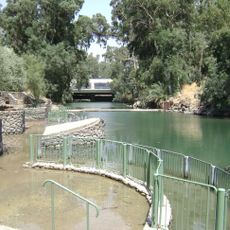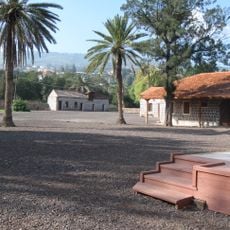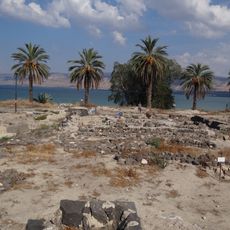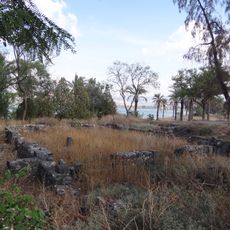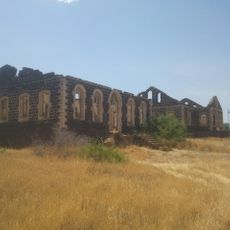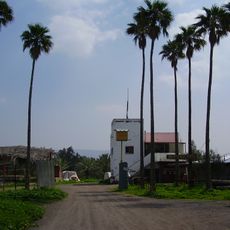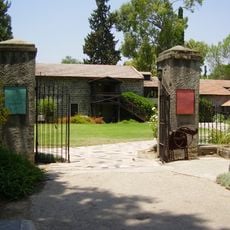
Ohalo, Archaeological site near Sea of Galilee, Israel
Ohalo II lies on the southwestern shore of the Sea of Galilee and preserves six oval brushwood huts, each 2.5 to 4.5 meters long, with hearths placed outside the dwellings. The site covers over 2,000 square meters and waterlogged sediments have kept organic remains intact.
People lived here around 23,000 years ago during the Last Glacial Maximum, when the climate was cooler and drier than today. Lake water covered the site for millennia until dropping levels revealed it again in 1989.
Basalt and limestone tools found at the site include grinding stones, bowls, sickle blades and pieces interpreted as net weights, while plant fibres were twisted into cord. The inhabitants ground wild barley, wheat and oats on a flat basalt slab set into the floor of the largest hut, the oldest known evidence of cereal grinding.
Access to the site is not possible because it stays underwater most of the time and only appears during very low water levels. Visitors can learn about the settlement from nearby viewpoints or information panels in the surrounding area.
The floor of the largest hut held a flat basalt stone about 30 cm long, fixed with pebbles and sand, with starch grains of wild barley, wheat and oats on its surface. It is the oldest known grinding stone, and the scatter of thousands of cereal grains around it stopped on one side, where the grinder is thought to have knelt.
The community of curious travelers
AroundUs brings together thousands of curated places, local tips, and hidden gems, enriched daily by 92,635 contributors worldwide.