Tancredi Tower, Tower remains in the Old City, Jerusalem, Israel
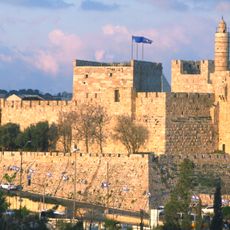
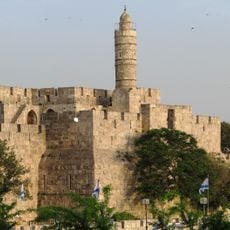
Tancredi Tower was a large fortification at the northwestern corner of Jerusalem's Old City, with a footprint of about 35 by 35 metres. Its base was found to protrude some 3 metres from beneath the 16th-century Ottoman city wall, which was built on top of the medieval tower's levelled ruins. The remains consist of massive ashlar stones, some from the Herodian period, set in grey mortar.
The tower was built during the Fatimid period in the 11th century and received its name from Tancred of Antioch during the First Crusade in 1099. It was destroyed in 1219 by al-Mu'azzam Isa, marking the end of this fortification's active period.
The Arabic name Qasr Jalud means "Goliath's Castle", linked to a tradition that David killed Goliath here, though the name may simply allude to the tower's size. Crusader sources called it Turris Tancredi after Tancred of Antioch, whose troops tried to scale the wall at this point on 13 June 1099. Lepers lived beside the tower around 1130 and later formed the Order of Saint Lazarus.
The tower's remains lie beneath the existing city wall and are not visible as a standing structure for visitors to see directly. Archaeological excavations near the northwestern corner of the Old City walls provide the main way to understand and study this historical site.
Medieval maps referred to this fortification by another name, Turris Nebulosa, which appears on 13th-century cartography. This alternative designation reveals how the site was known to distant mapmakers before it faded from active use and memory.
The community of curious travelers
AroundUs brings together thousands of curated places, local tips, and hidden gems, enriched daily by 93,441 contributors worldwide.