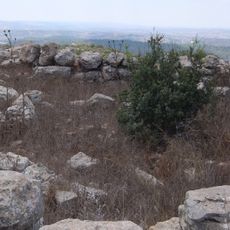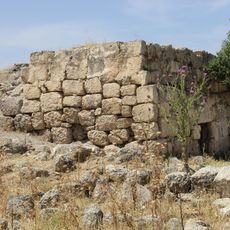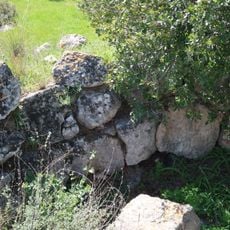
Ha-Teomim cave, Limestone cave in Judean Hills, Israel.
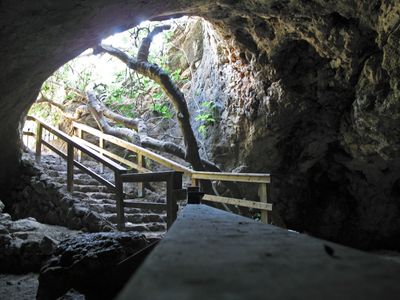
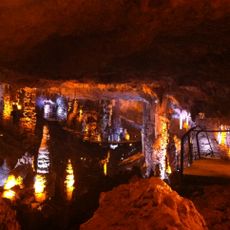
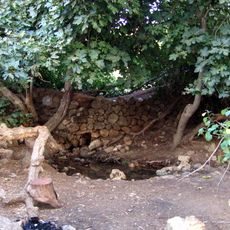
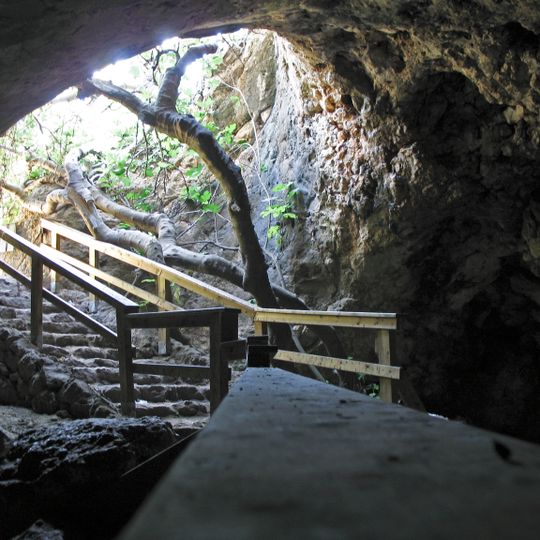
Ha-Teomim is a karstic cave on the northern bank of Nahal HaMe'ara, about 10 m above the streambed, measuring roughly 50 m wide and 75 m long. A large fig tree stands at the entrance, where dark stone steps with a wooden handrail climb toward the opening. Inside, a main hall about 20 m deep ends at a small man-made pool fed by a spring, with smaller passages branching off.
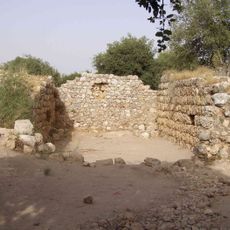
Archaeological findings show the cave served as shelter during the Bar Kochba revolt against Romans around 2,000 years ago. People sought protection within its protected chambers during that conflict.
The Arabic name, Magharat Umm al-Tawamin, means "Cave of the Mother of the Twins." Local fellahin told of a childless woman who drank water dripping from the cave roof and later bore twins. A second tale names a robber, Abdullah, whose twin sons died inside while searching for his hidden treasure.
The cave lies on the northern bank of Nahal HaMe'ara, about 10 m above the streambed and roughly 2 km east of Moshav Zanoah. It is closed from 1 November to 31 March to protect hibernating bats, and open the rest of the year. Access is on foot along a marked trail of about 3 km.
The cave holds about 3,000 bats of four species, among them the Egyptian fruit bat and the lesser horseshoe bat. They roost in the damp crevices and on the ceilings, and the winter closure from 1 November to 31 March protects them during hibernation.
The community of curious travelers
AroundUs brings together thousands of curated places, local tips, and hidden gems, enriched daily by 93,007 contributors worldwide.