Har Etan, Mountain summit in Jerusalem district, Israel
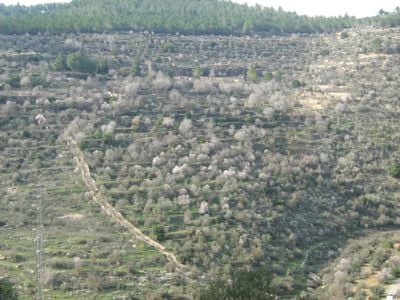
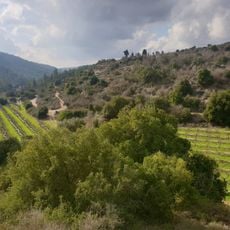
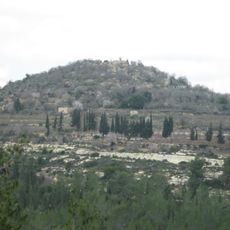
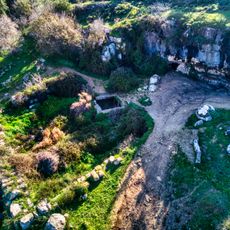
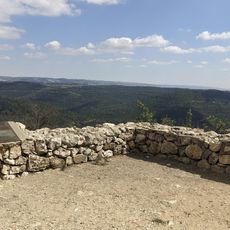
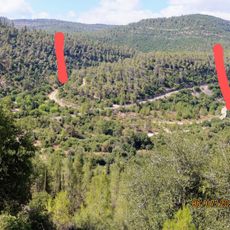
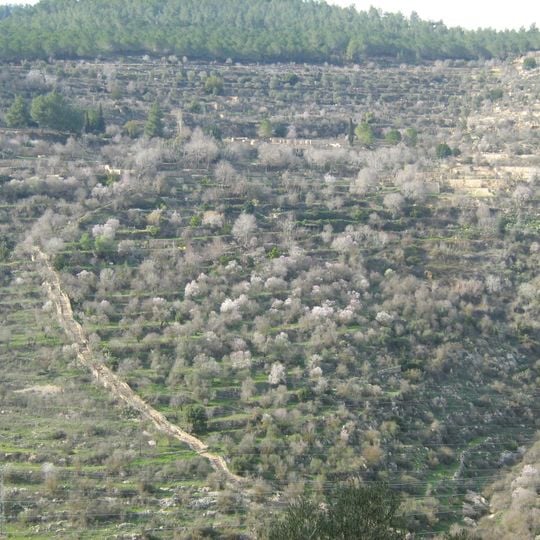
Har Etan is a 788-metre mountain in the Jerusalem hills, part of the Sataf forest managed by Keren Kayemeth LeIsrael. Its slopes are stepped with stone agricultural terraces, most of them built in recent centuries, and planted pine and cypress woods cover parts of the planned national park. An 8 km loop trail, Shvil Sovav Har Etan–Ya'ar Sataf, circles the mountain at a constant elevation.
Har Etan lies in the Jerusalem hills near the Harel interchange on the Jerusalem–Tel Aviv road, by Mevaseret Zion and Beit Zayit. Two Arab villages, Khirbat al-Luz and Sataf, stood on the mountain with hundreds of residents until they left during the 1948 war. In 1949–1950 immigrant settlements were founded here: Bikhura for North African Jews, and Luzim for Yemenite Jews, whose residents were moved to Even Sapir after the site was abandoned. A base of Unit 101 later occupied the site.
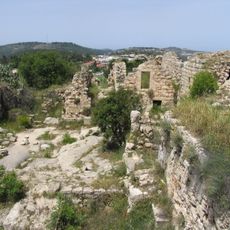
The mountain lies within the Sataf forest, managed by the Jewish National Fund. Two Arab villages, Khirbat al-Luz and Sataf, stood here with hundreds of residents until they left during the 1948 war; the ruins of Khirbat al-Luz lie south of the summit. The terraces have not been farmed since 1948, and the thorny burnet has spread across them.
The mountain is accessible via marked paths and best visited during stable weather conditions. Sturdy shoes are recommended, as the ground is uneven and can be slippery in places.
During the 1991 Gulf War a Patriot missile battery was stationed on Har Etan, and the foundations of its firing position are still visible on the mountain. The forest covering the slopes was planted in memory of victims of wars and terrorist attacks.
The community of curious travelers
AroundUs brings together thousands of curated places, local tips, and hidden gems, enriched daily by 94,372 contributors worldwide.