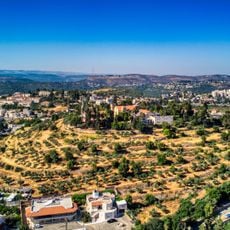
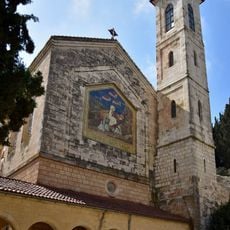
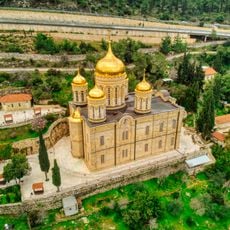
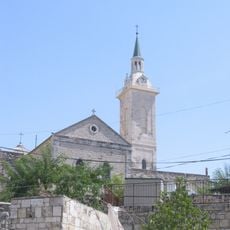
Belmont, Crusader fortress in Jerusalem Hills, Israel.
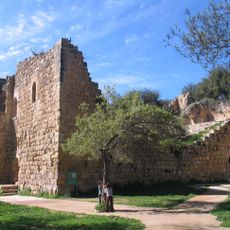
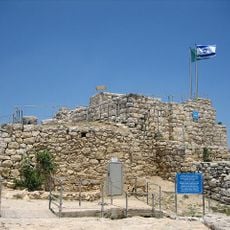
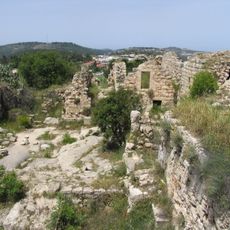
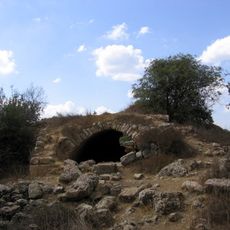
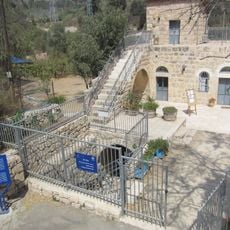
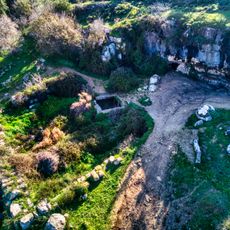
Belmont is a Crusader fortress ruin on Tel Tzova, about 10 km west of Jerusalem. Its outer wall is an irregular polygon roughly 100 by 115 metres, built of ashlar blocks on a sloping rock-cut base, with a main gate on the south side. Inside, a second wall encloses a courtyard with a three-winged building, stone stair remains, olive and grape presses, and a vaulted structure whose wall carries a carved horse and an inverted three-branched plant.
The Hospitallers bought the village of Abu Ghaush around 1140 and built the castle of Belmont on a nearby hill; a castellan is first mentioned in 1157. Saladin's forces took it in August 1187, and in September 1191 he ordered it destroyed. Four English coins from 1180–1247 hint at a Crusader return.
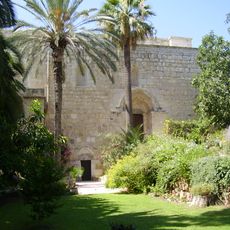
The ruins display medieval military architecture through stone walls that remain from Crusader times, showing how the fortress was built to control the surrounding region. Visitors walk through spaces designed for medieval defense and garrison life.
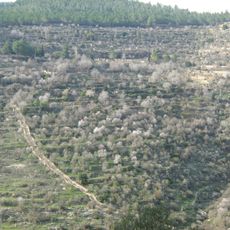
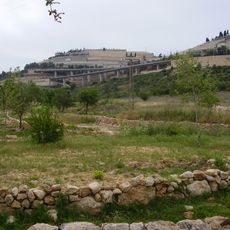
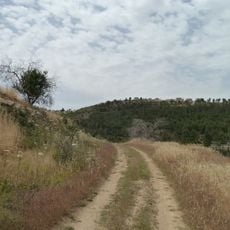
The ruins lie on Tel Tzova inside Kibbutz Tzova, about 10 km west of Jerusalem, reached from the Jaffa–Jerusalem road via Abu Ghosh. The outer wall ring measures roughly 100 by 115 m, with the main gate on the south side facing east; the inner enclosure is about 33 by 40 m. Ground is uneven and partly overgrown, so sturdy shoes help.
The outer Crusader wall is an irregular eight-sided ring 215 metres long, built of ashlar stones laid on a sloping base cut into the rock. Inside, a horse or donkey is carved into the wall of the vaulted building, and another stone bears a Crusader carving of an inverted three-branched plant.
The community of curious travelers
AroundUs brings together thousands of curated places, local tips, and hidden gems, enriched daily by 92,641 contributors worldwide.