Vidyasagar Setu, Cable-stayed bridge over Hooghly River in Kolkata, India.
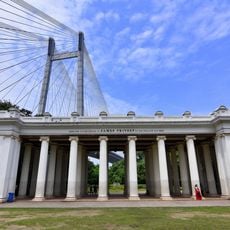
Vidyasagar Setu is a cable-stayed bridge over the Hooghly River in Kolkata, India, spanning 823 meters and supported by 121 steel cables. The cables run in a fan pattern from two pylons that each rise 127 meters (417 feet) high.
Construction began in 1979 and took twenty years to complete, with the crossing opening in 1992 as the first such structure in India. It emerged as a response to growing traffic needs between both banks of the river.
This crossing honors a social reformer from the nineteenth century who worked for women's education and against child marriage. His influence shaped the region and his name reminds people of the link between engineering progress and social change.
The bridge carries six lanes, three in each direction, and has a 1.2-metre footpath on either side, but walking across has been banned since opening for safety reasons. An automatic lift stands beside the northern steel pylon on the Kolkata side for maintenance access. Traffic is heavy: over 100,000 vehicles use the Kona Expressway approach, and daily volumes of 45,000 to 61,000 were recorded by early 2008 against a capacity of 85,000.
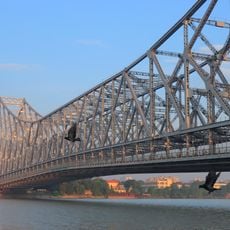
The design differs markedly from the nearby Howrah Bridge, which uses a cantilever structure. This modern technique allowed for a slimmer form and showed new possibilities for Indian infrastructure projects.
The community of curious travelers
AroundUs brings together thousands of curated places, local tips, and hidden gems, enriched daily by 92,906 contributors worldwide.