Punjab and Haryana High Court, Appellate court in Chandigarh, India
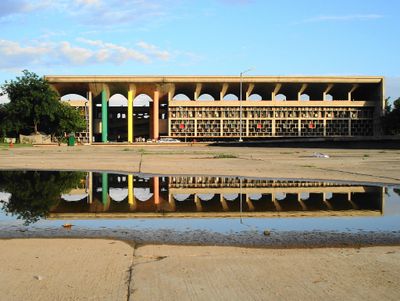
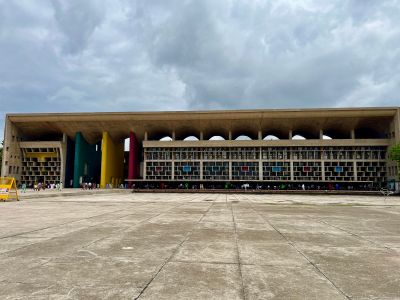
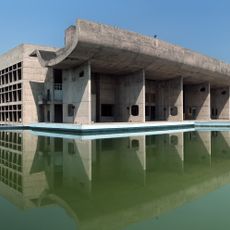
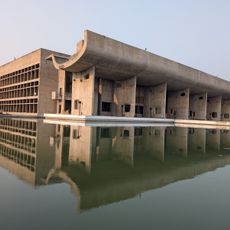
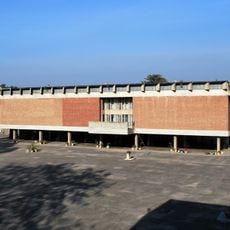
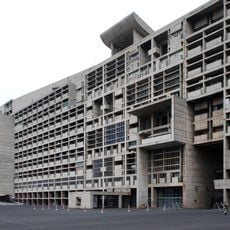
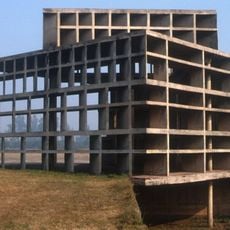
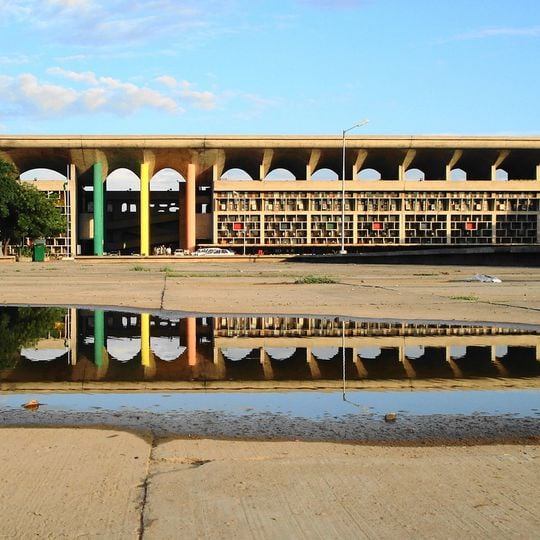
Punjab and Haryana High Court is an appellate courthouse in Chandigarh, India, known for its modernist design featuring horizontal lines, geometric patterns, and exposed concrete surfaces. The building stands within a larger government complex and displays wide facades, open colonnades, and raised balconies that cast shadows over the public areas below.
The court began its work in August 1947 after India gained independence and Partition shifted the seat from the former Lahore High Court. The modernist design emerged in the 1950s as part of the new city plan for Chandigarh, which was to serve as the capital of the divided Punjab region.
The building name refers to the two northern states served by its judicial authority, while its modernist design forms part of a larger government quarter. Visitors notice the open courtyards and shaded corridors that function as natural cooling spaces during hot months, bringing together lawyers and court staff on hearing days.
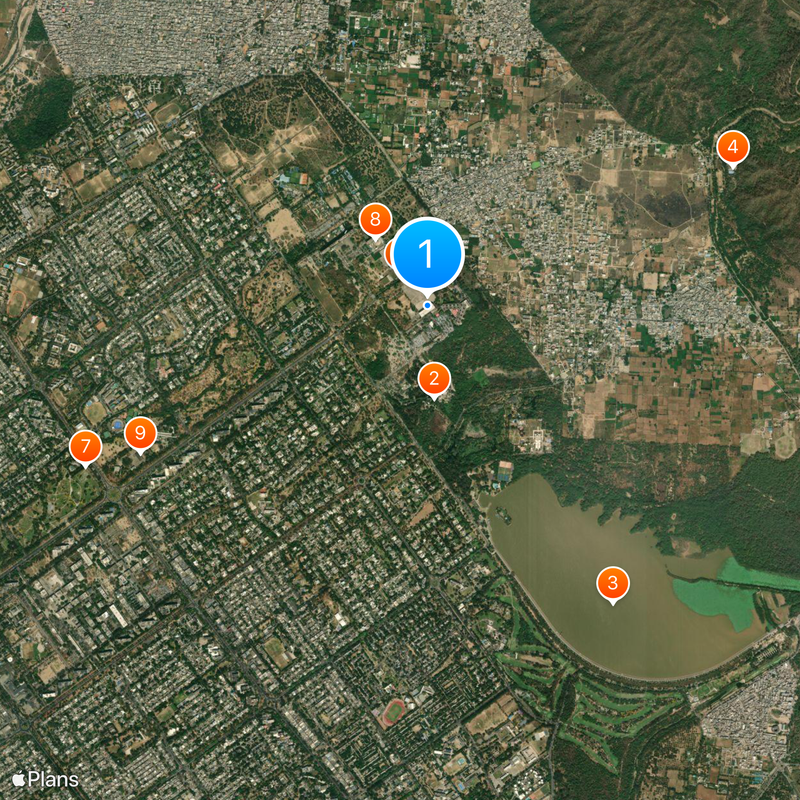
The complex lies in the northern sector of Chandigarh and is best reached during cooler morning hours. Visitors should wear appropriate clothing, as the building continues to function as an active courthouse with daily hearings and security checks at the entrance.
The concrete surfaces of the court age naturally and develop rough textures and discoloration over time from monsoon rains and sunlight. This weathering patina was part of the design philosophy from the start, showing how the building interacts with the local climate.
The community of curious travelers
AroundUs brings together thousands of curated places, local tips, and hidden gems, enriched daily by 60,000 contributors worldwide.