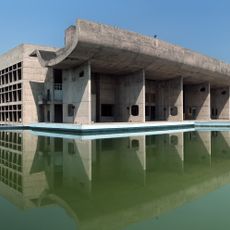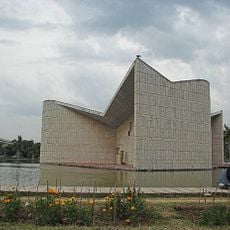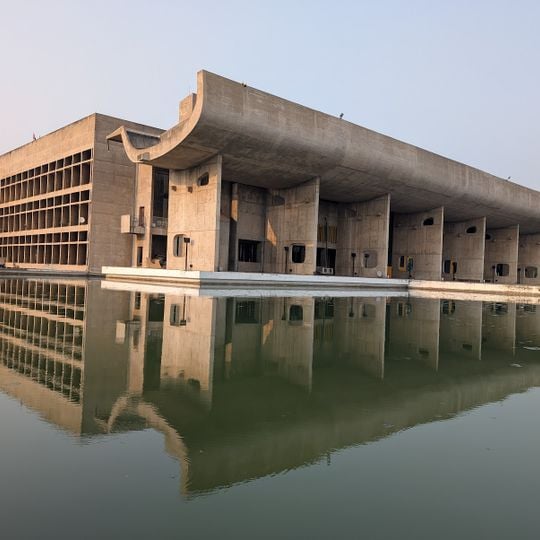
Palace of Assembly, Legislative assembly building in Chandigarh, India.
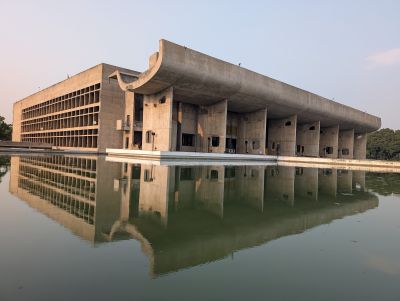
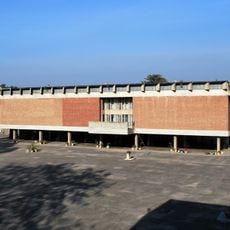
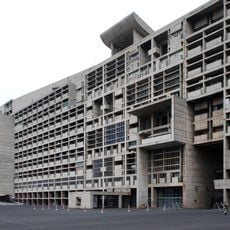
The Palace of Assembly stands as a concrete structure with geometric shapes, large overhanging roofs, and carefully arranged columns across its exterior surfaces.
Le Corbusier designed this government building between 1951 and 1963 to establish a new capital for Punjab following India's partition.
The building represents a turning point in Indian architecture, marking the transition from colonial styles to modern architectural expression in government structures.
Visitors can schedule guided tours of the legislative chambers and assembly halls through the Chandigarh Tourism Department with advance reservations.
The building's concrete surfaces create distinct patterns of light and shadow throughout the day, changing its appearance as the sun moves across the sky.
Location: Chandigarh
Architects: Le Corbusier
Architectural style: brutalist architecture, functionalism
Part of: Chandigarh Capitol Complex
GPS coordinates: 30.76111,76.80306
Latest update: March 13, 2025 12:27
Brutalist architecture emerged in the decades following World War II, producing buildings that challenged conventional design through their honest expression of materials and function. From Le Corbusier's Unité d'Habitation in Marseille to Louis Kahn's National Assembly in Dhaka, these structures define a global movement that prioritized raw concrete, bold geometric forms and exposed construction elements. The style reached across continents, shaping university libraries in Chicago, government buildings in Boston and Chandigarh, residential towers in London, and cultural centers in São Paulo. Each building reflects the architectural philosophy of its time, when architects sought to create functional spaces through direct expression of structure and material. This collection documents examples from Europe, Asia, North and South America, representing the full range of building types that defined the movement. You'll find administrative complexes that house parliaments and municipal offices, educational facilities serving major universities, residential towers providing urban housing, and cultural institutions including museums and theaters. The structures share common characteristics—concrete left exposed to show its texture and formwork patterns, geometric compositions that emphasize mass and volume, and architectural elements that reveal rather than conceal how buildings stand and function. These sites offer insight into a period when architects reimagined how modern cities could be built and how public spaces could serve their communities.
Rock Garden of Chandigarh
1.1 km
Sukhna Lake
2.8 km
National Highway 5
23.3 km
Mata Mansa Devi Mandir
2.3 km
Open Hand Monument
473 m
Chandigarh Capitol Complex
269 m
Zakir Hussain Rose Garden
2.3 km
Fateh Burj
14.5 km
Chhatbir Zoo
17.6 km
Nada Sahib
10.5 km
Government Museum and Art Gallery, Chandigarh
2 km
Chandi Mandir
3.1 km
Kasauli Brewery
22.8 km
Politics of Chandigarh
2.5 km
Japanese Garden, Chandigarh
6.6 km
Sukhna Lake Wildlife Sanctuary
4.9 km
Gandhi Bhawan
3 km
Secretariat Building
239 m
Funcity
16.2 km
Parrot Bird Sanctuary Chandigarh
4.6 km
Burail Fort
7.2 km
Mohan Park
32.3 km
Garden of Silence
3.6 km
Sector 42 Stadium
6.5 km
Sanitary garden
6.1 km
Le Corbusier Centre
3.5 km
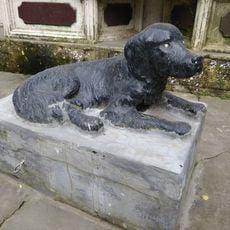
Statue of a Dog, Kasauli, India
21.8 km
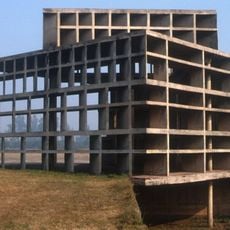
Tower of Shadows
195 mReviews
Visited this place? Tap the stars to rate it and share your experience / photos with the community! Try now! You can cancel it anytime.
Discover hidden gems everywhere you go!
From secret cafés to breathtaking viewpoints, skip the crowded tourist spots and find places that match your style. Our app makes it easy with voice search, smart filtering, route optimization, and insider tips from travelers worldwide. Download now for the complete mobile experience.
A unique approach to discovering new places❞
— Le Figaro
All the places worth exploring❞
— France Info
A tailor-made excursion in just a few clicks❞
— 20 Minutes