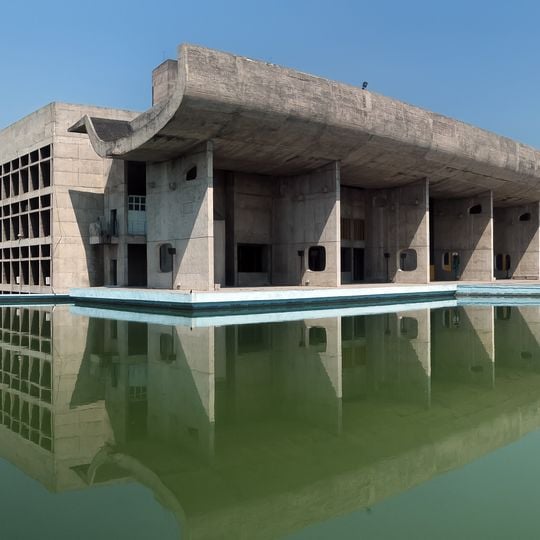
Chandigarh Capitol Complex, Modernist government complex in Chandigarh, India.
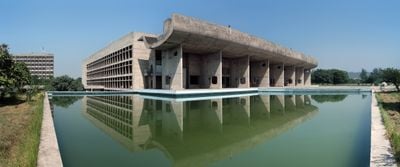
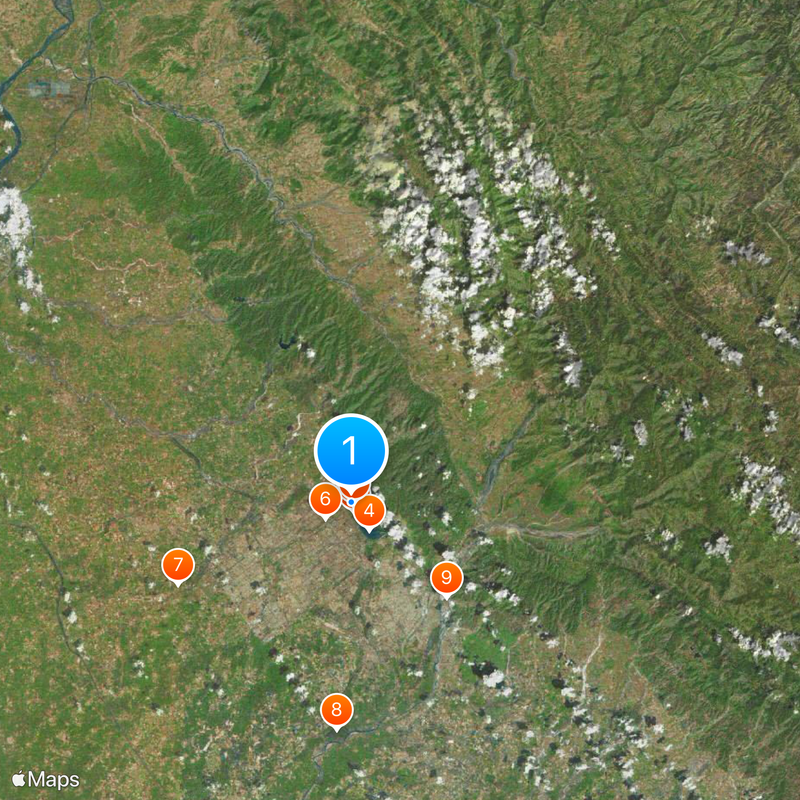
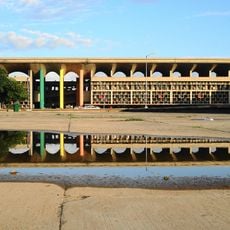
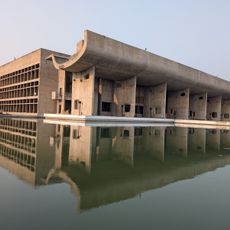
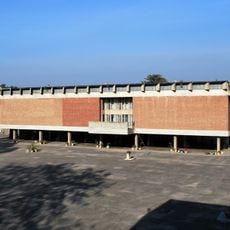
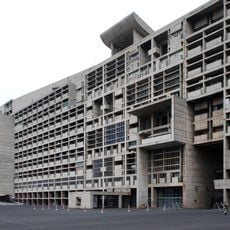
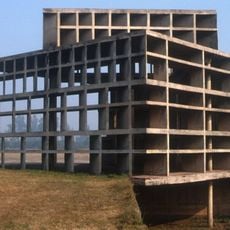
The Capitol comprises three main structures in Sector 1: the Assembly building, Secretariat building, and High Court across 100 acres (40 hectares). Exposed concrete defines the architecture, complemented by rectangular and parabolic forms. A broad esplanade connects the structures, while water features and geometric gardens organize the public space. The architect's Modulor system determined the proportions of all elements.
Le Corbusier conceived the ensemble from 1951 as part of the urban planning project following the partition of British India, when Punjab required a new capital. Construction began in 1952, with the Assembly building completed in 1962 and the High Court in 1956. UNESCO recognized the site in 2016 as part of Le Corbusier's global architectural work. Maxwell and Jeanneret assisted with on-site execution.
The ensemble symbolizes India's democratic transformation after independence and serves as the regional administrative center for Punjab and Haryana. These buildings continue to function as the seat of government institutions for both states, with their monumental proportions expressing the authority of state institutions in a young democracy. The open plaza design was intended to symbolize citizen access to government.
Visitors must register at the tourist information center in Sector 1 with identification documents before joining guided tours. Tours operate mornings and afternoons, with the complex closed on weekends and public holidays. Photography is permitted only outside the buildings. The nearest bus terminal sits 2 miles (3 kilometers) away in Sector 17. Respectful attire is expected when visiting government buildings.
The Open Hand, a rotating metal sculpture standing 85 feet (26 meters) tall, sits at the northern end of the esplanade as a symbol of peace and reconciliation. The structure rotates with the wind and was meant to embody Le Corbusier's philosophical ideas about giving and receiving. Installation was completed only in 1985 after his death, with the design sparking political debates about symbolic versus practical state spending.
The community of curious travelers
AroundUs brings together thousands of curated places, local tips, and hidden gems, enriched daily by 60,000 contributors worldwide.