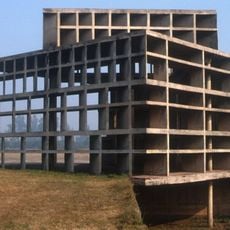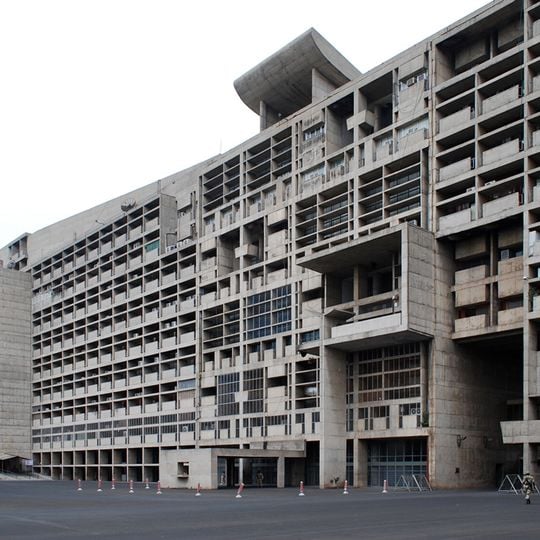
Secretariat Building, Government building in Chandigarh, India
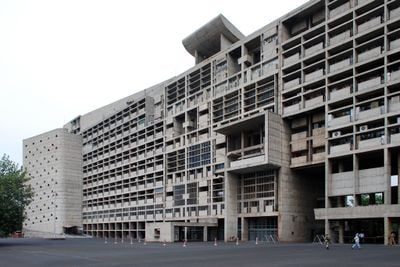
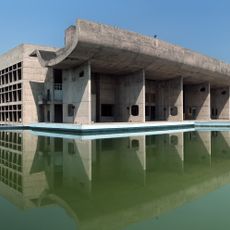
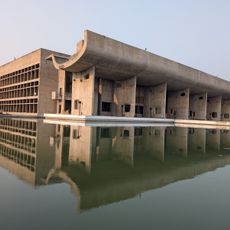
The Secretariat Building is an administrative structure with raw concrete construction and expansive windows spanning multiple stories within the Capitol Complex of Chandigarh. The structure contains functional spaces with distinctive brutalist features and internal courts that regulate light and ventilation.
Le Corbusier designed this administrative center in 1953 as part of a new capital city project following India's independence from British rule. The structure emerged as the core of an urban vision that combined modern functionalism with the ambition to reshape an entire region.
The building expresses modern design through its geometric forms and raw concrete surfaces, which shaped how people think about contemporary Indian architecture. The stark exterior with its pronounced lines and functional elements shows how structure influences the daily work of those inside.
The building is accessible via public roads and suits those interested in architecture who want to examine the outer facade and urban composition. Visitors should come in early morning or late afternoon when sunlight emphasizes the concrete surfaces and window patterns.
The structure incorporates specially designed sunlight control devices and natural ventilation systems adapted to India's hot climate, regulating interior temperatures without relying on air conditioning. These innovative techniques demonstrate how European design principles can adapt to local conditions.
The community of curious travelers
AroundUs brings together thousands of curated places, local tips, and hidden gems, enriched daily by 92,717 contributors worldwide.