Mattancherry Palace, Portuguese-built palace in Mattancherry, Kochi, India
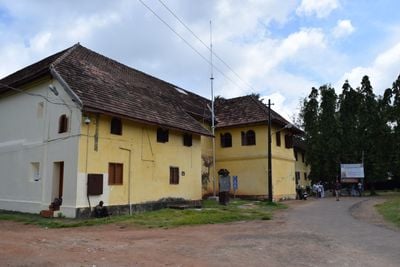
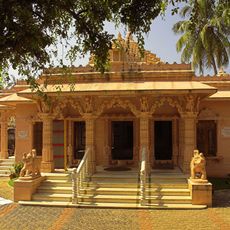
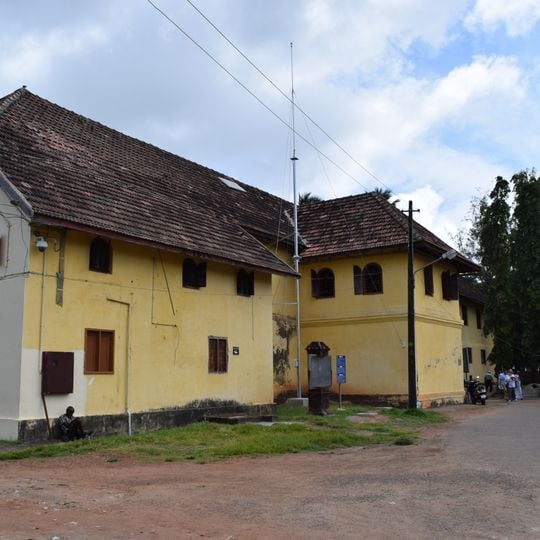
Mattancherry Palace is a two-storey building with pale yellow walls, a white-painted lower section and a dark brown tiled hipped roof over two connected blocks. It is a quadrangular Nālukettu structure with a central courtyard, and its arches and chamber proportions show European influence.
The Portuguese built the palace around 1545 and gave it to Veera Kerala Varma, king of Cochin from 1537 to 1565, to appease him after they plundered a nearby temple. The Dutch took over Mattancherry in 1663 and carried out repairs, which earned the building the name Dutch Palace. Hyder Ali later seized it, and the British East India Company took it after defeating him.
The palace's walls carry numerous murals in the tradition of Hindu temple art, religious, decorative and stylised, painted in rich warm colours using the tempera technique. The building is also called the Dutch Palace, although the Portuguese built it; the name dates from the Dutch repairs of 1663.
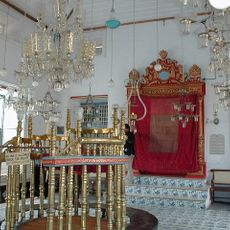
The palace stands on Palace Road in Mattancherry, near the Paradesi Synagogue and Jew Town's antique shops. It is a protected monument under the Kerala government, restored by the Archaeological Survey of India in work finished in 2009. Allow time to walk between the courtyard and the upper halls.
The Coronation Hall holds portraits of Cochin's rajas painted by local artists in Western style from 1864 onward, and its ceiling carries floral woodwork. The same room displays an ivory palanquin, a howdah, royal umbrellas, ceremonial dress, coins and stamps.
The community of curious travelers
AroundUs brings together thousands of curated places, local tips, and hidden gems, enriched daily by 92,722 contributors worldwide.