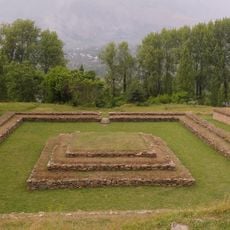
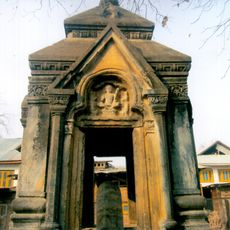
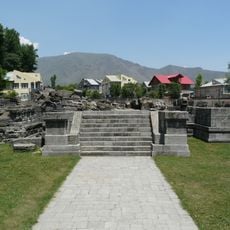
Achabal, Mughal garden complex in Anantnag district, India.
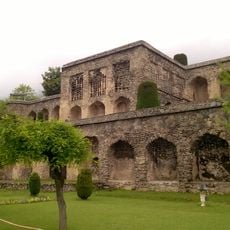
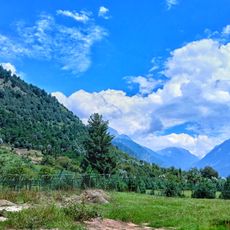
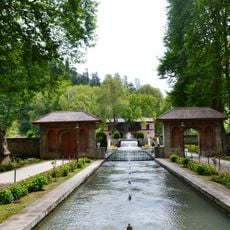
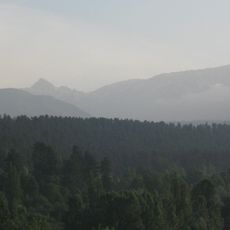
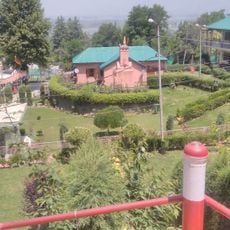
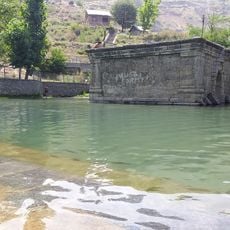
Achabal is a garden complex from the Mughal period with terraced lawns, water channels, and flowering plants arranged across several levels. The site sits at an elevation of about 1936 meters (6,350 feet) in the foothills of the region.
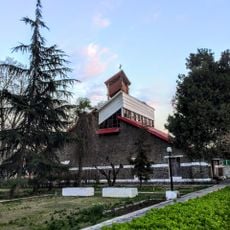
Achabal's upper garden, Bag-e-Begum Abad, was laid out by Malika Noor Jehan Begum in 1616 AD and was also known as Sahib Abad; it holds a hamam warmed by a lamp called Tosnag. Cascades and fountains were added by Mughal emperors, and a mosque in the garden is attributed to Prince Dara Shikoh. Kalhana's Rajatarangini traces the town to Aksha, son of King Nara II of the Gonanditya dynasty.
The garden's name comes from the Sanskrit Akṣavāla, after Aksha, son of King Nara II of the Gonanditya dynasty, who founded the settlement according to Kalhana's Rajatarangini. The upper section, Bag-e-Begum Abad, was developed by Malika Noor Jehan Begum in 1616 AD and is also called Sahib Abad. A mosque in the garden is believed to have been built by Mughal prince Dara Shikoh.
Visitors can reach the site from Anantnag using regular transportation options, with the journey taking about half an hour. It is best to arrive early in the day to enjoy quieter hours and experience the gardens in better light conditions.
The garden's upper section, Bag-e-Begum Abad, was laid out by Malika Noor Jehan Begum in 1616 AD and is also called Sahib Abad; it holds a hamam warmed by a logical lamp known as Tosnag. A mosque in the garden is believed to have been built by Mughal prince Dara Shikoh. A trout hatchery also operates nearby.
The community of curious travelers
AroundUs brings together thousands of curated places, local tips, and hidden gems, enriched daily by 93,009 contributors worldwide.