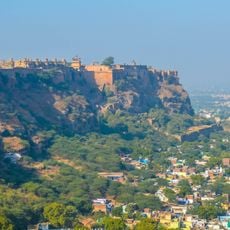
Gwalior Fort, Hill fort in Gwalior, India
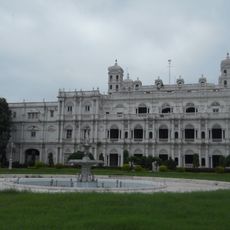
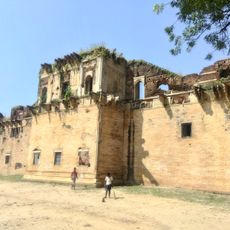
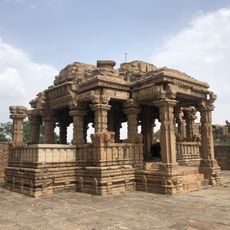
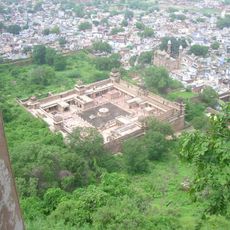
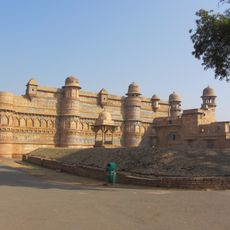
Gwalior Fort is a hill fortress on the Gopachal ridge in Gwalior, India, built of ochre Vindhyan sandstone. Its outer wall runs about 2 miles (2.4 km) along a plateau rising 342 feet (104 m) above the plain. The wall combines recessed niches, arched openings framed by blue tile panels, domed towers and a central stepped entrance.
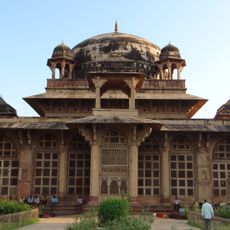
Local legend credits King Suraj Sen, who ruled around the 3rd century CE, with building a wall around the pond Suraj Kund and founding the fort after the sage Gwalipa cured his leprosy. Inscriptions show the fort existed by the early 6th century, and the Tomars took control in 1398; Man Singh Tomar (reigned 1486–1516) commissioned several monuments, including the Man Mandir palace.
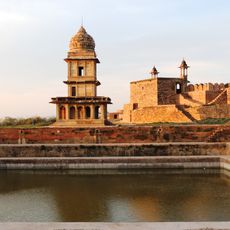
The name Gwalior means "abode of Saint Gwalipa", the sage who cured King Suraj Sen of leprosy with water from the sacred pond Suraj Kund. The fort is also called Gopachal or Gopgiri, "cowherd's hill", in ancient Sanskrit inscriptions. The Gujari Mahal palace was built by Man Singh Tomar for his ninth wife, Mrignayani of the Gurjar community.
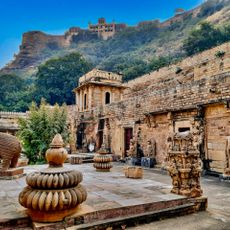
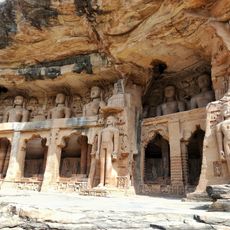
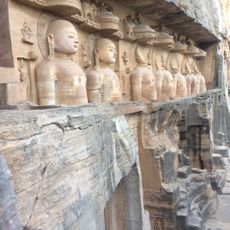
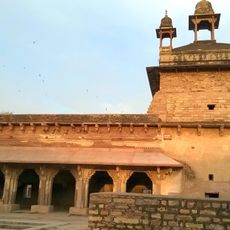
Two routes reach the plateau: the Gwalior Gate, which is on foot only, and the Urvai Gate, reached by a narrow, steep road for vehicles. The road passes large rock-cut Jain Tirthankara figures carved into the cliffs. Gujari Mahal, built in the 15th century, now holds a museum of sculptures dated by carbon dating to the 1st century CE.
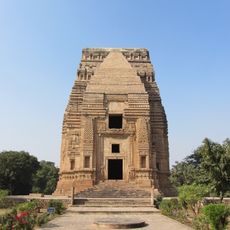
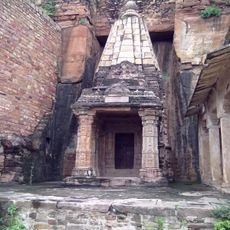
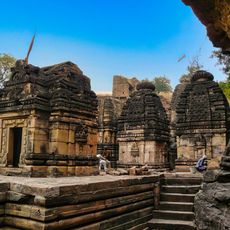
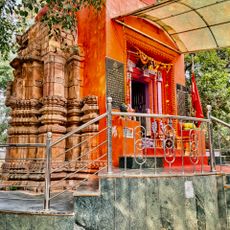
The outer walls bear rock-cut figures from Jainism that can reach over twenty meters (66 feet) in height. An inscription in one of the temples shows one of the earliest known uses of the number zero in a mathematical context.
The community of curious travelers
AroundUs brings together thousands of curated places, local tips, and hidden gems, enriched daily by 92,310 contributors worldwide.