Hazira Maqbara, Islamic mausoleum in Vadodara, India
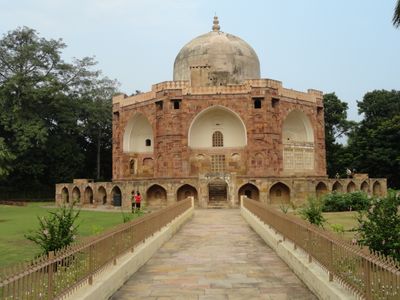
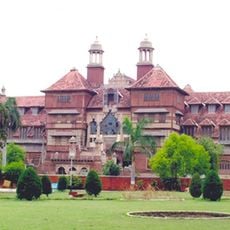
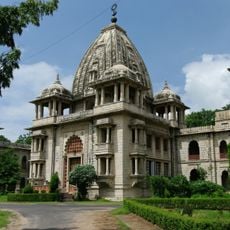
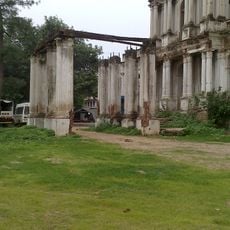
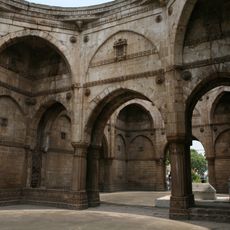
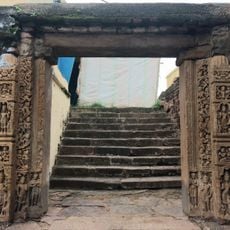
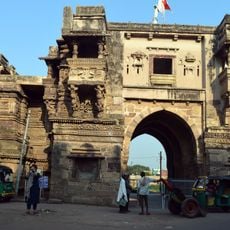
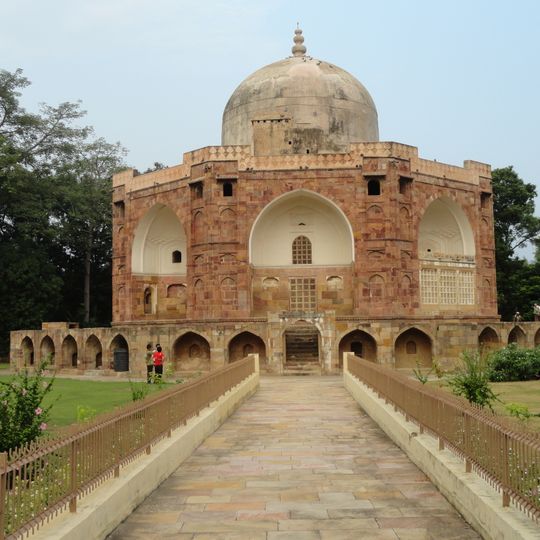
Hazira Maqbara is a sandstone mausoleum in the Vadodara region of Gujarat, India, decorated with carved stone screens, domed roofs, and geometric patterns on its walls and facades. The structure is organized around several interior chambers, each surrounded by carved arches and ornamental stonework.
Qutbuddin Muhammad Khan was Akbar's appointed governor of Gujarat and tutor to Prince Salim; his son Naurang Khan also held offices in Gujarat under Akbar. Qutbuddin was killed in 1583 by Muzaffar Shah III, the last sultan of Gujarat, and the mausoleum holds his tomb and his son's. The building follows the style of Mughal tombs at Delhi, with a double dome and a high octagonal platform.
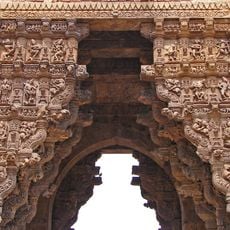
The surfaces of the building show a meeting of Persian geometric patterns and Indian stone carving, visible as you walk through the rooms and study the walls up close. The arches and window screens are carved with a level of detail that reflects the craftsmen's background in both traditions.
The site is open daily from sunrise to sunset, which gives enough time to walk around the exterior and explore the interior rooms without rushing. Visiting in the morning tends to be more comfortable, as the light falls well on the carved stone surfaces.
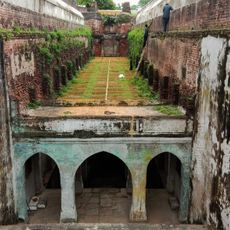
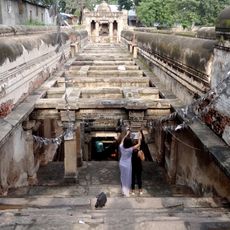
The real grave lies in an underground chamber, while the tomb chamber holds a false grave; the Quranic inscriptions in Arabic are carved on the lintels, arches and above the jali screens of the eastern walls. A stepwell once stood across the modern road to the west, probably supplying water to the garden.
The community of curious travelers
AroundUs brings together thousands of curated places, local tips, and hidden gems, enriched daily by 92,722 contributors worldwide.