National Gandhi Museum, National museum at Raj Ghat, New Delhi, India
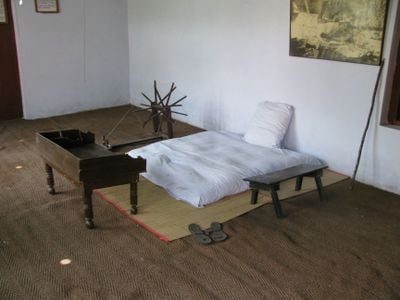
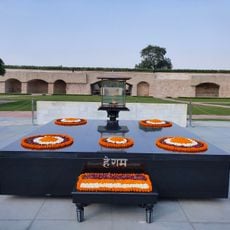
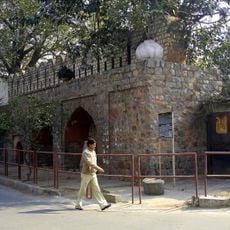
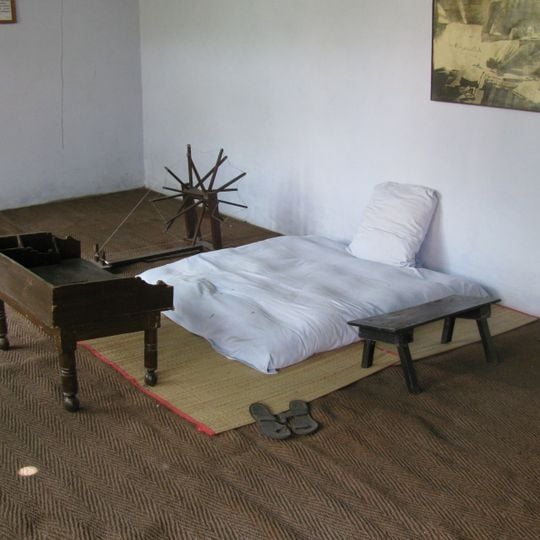
The National Gandhi Museum stands beside the Samadhi at Raj Ghat in New Delhi. Its galleries hold a Satyagraha woodcut by Willemia Muller Ogterop, one of Gandhi's walking sticks, the shawl and dhoti he wore when assassinated, one of the bullets that killed him, and his urn, along with his teeth and an ivory toothpick.
Gandhi was assassinated on 30 January 1948, and collectors soon gathered his personal items, newspapers and books, first taken to Mumbai. The holdings moved to buildings near Kota House in New Delhi in 1951 and to a mansion in 1957. In 1959 the museum shifted to Raj Ghat beside Gandhi's Samadhi, and President Rajendra Prasad opened it officially in 1961, on the 13th anniversary of the assassination.
The museum's library holds over 35,000 books and documents, split between works by or about Gandhi and books on other subjects, plus 2,000 periodicals in English and Hindi. The galleries are named for phases of his life: martyrdom, commemorative, art and a general photo gallery. Temporary exhibitions turn to Indian political leaders and peace movements.
The museum sits next to the Raj Ghat memorial and is easy to reach. Visitors can find clear signage and take guided tours to learn more about the philosophy and teachings.
Among the personal effects on display are a bullet that killed Gandhi, his urn, and even his teeth and an ivory toothpick. The museum also keeps the shawl and dhoti he wore when he was assassinated.
The community of curious travelers
AroundUs brings together thousands of curated places, local tips, and hidden gems, enriched daily by 92,690 contributors worldwide.