Mandla Plant Fossils National Park, Paleobotanical national park in Mandla district, India
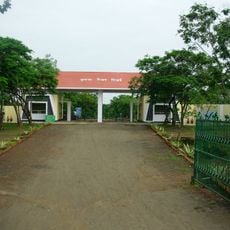
Mandla Plant Fossils National Park is a paleobotanical reserve in Madhya Pradesh that displays remains of plants from an era when this region was underwater. The site shows fossilized specimens of palms and other vegetation preserved in rock formations across its protected grounds.
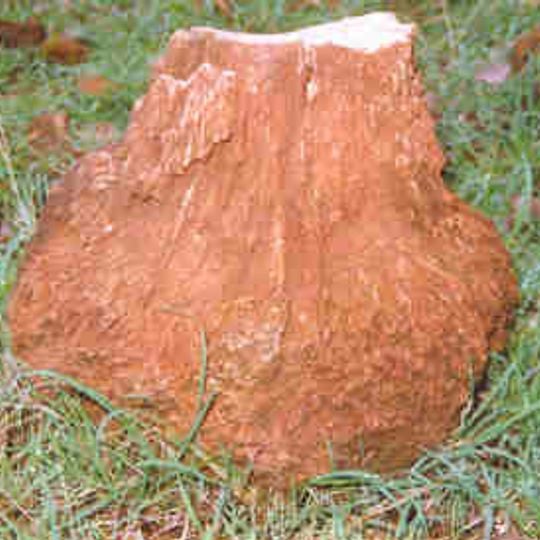
Dr. Dharmendra Prasad, a statistical officer of the Mandla district and honorary secretary of its archaeology unit, founded the site in the 1970s; it was declared a national park in 1983. The plant, leaf, fruit, seed and shell fossils found here date back as far as 65 million years, and the palm fossils are the most prominent. Fossil wood resembling eucalyptus found at Ghughua may be the oldest of its type, supporting a Gondwanan distribution.
The park is known locally as Ghughua, after the main fossil site, a 6.84-acre plot; three further fossil sites have been found at Umariya-Silther, Devri Khurd and Barbaspur. Dr. Dharmendra Prasad, a statistical officer of Mandla district and honorary secretary of its archaeology unit, founded the site in the 1970s. Visitors can look for palm fossils, the most prominent finds, along with fossil leaves, fruits, seeds and shells.
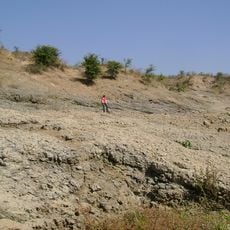
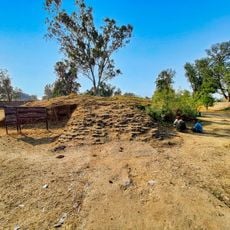
The park lies beside National Highway 11, 14 km from Shahpura and 76 km from Jabalpur. The main fossil site at Ghughua covers 6.84 acres; three further sites, Umariya-Silther, Devri Khurd and Barbaspur, lie nearby. Fossil beds are exposed in open rock, so expect sun and carry water.
The park holds over 31 different plant genera, some of which may belong to the oldest known eucalyptus types. This collection shows an extraordinary range of flora from a very distant past.
The community of curious travelers
AroundUs brings together thousands of curated places, local tips, and hidden gems, enriched daily by 92,738 contributors worldwide.