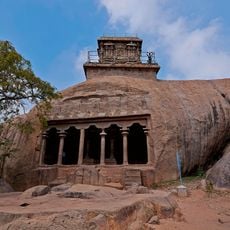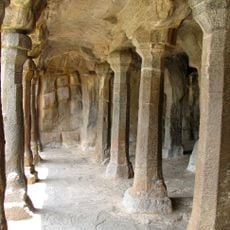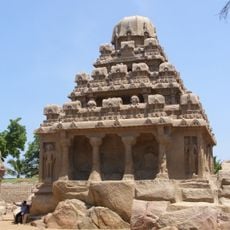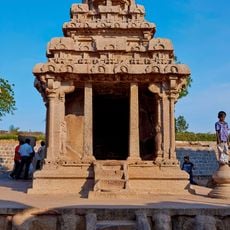
Bhima Ratha, Rock-cut monument in Mahabalipuram, India
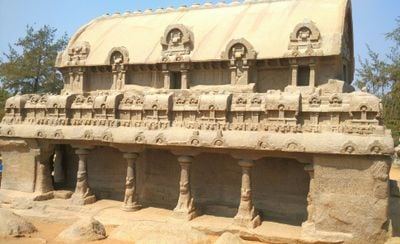
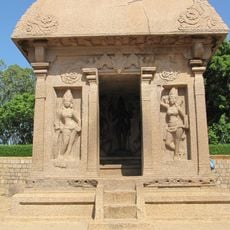
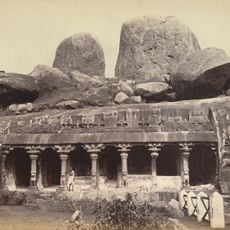
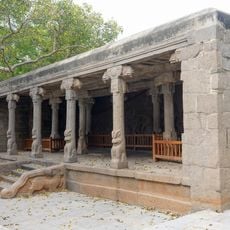
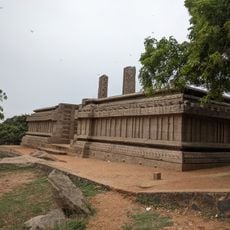
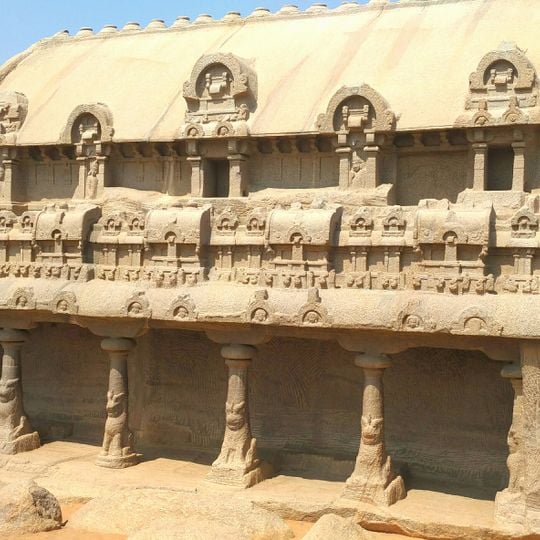
Bhima Ratha is a monolithic rock-cut monument in Mahabalipuram, Tamil Nadu, India, carved from pale tan granite as an oblong single-tiered shrine. Its barrel-vaulted roof carries three dormer-like kudus with arched windows, and below them a band of small pavilions runs above four square pillars whose shafts bear standing figures in relief. The ground floor was left unfinished.
Bhima Ratha was carved in the late 7th century under Pallava kings Mahendravarman I and his son Narasimhavarman I (reigned 630–680). It is one of the five Pancha Rathas, aligned north–south on a shared plinth, and replicates an earlier wooden structure. Work stopped after Narasimhavarman I died, leaving the ground floor unfinished; the complex has been a UNESCO World Heritage Site since 1984.
The ratha shows the typical features of Dravidian temple architecture, including deeply carved columns and small shrine niches along the outer wall. Visitors can study the stonework up close because the surfaces were never plastered or reworked.
The monument sits within the archaeological area of Mahabalipuram and can be reached on foot from the other rock monuments nearby. Comfortable footwear is a good idea since the ground around the structures is uneven.
The oblong plan, 42 by 24 feet, is thought to have been intended for an Anantashayana Vishnu, a reclining image of the god, which explains the dedication to Vishnu recorded in the sources. The ground floor was left unfinished, and its pillar bases with lion posts show what the builders planned.
The community of curious travelers
AroundUs brings together thousands of curated places, local tips, and hidden gems, enriched daily by 94,263 contributors worldwide.