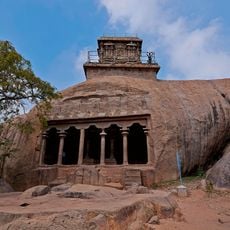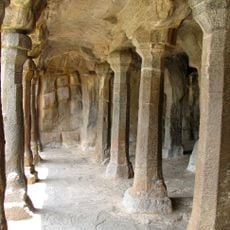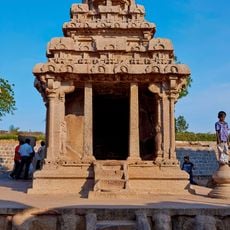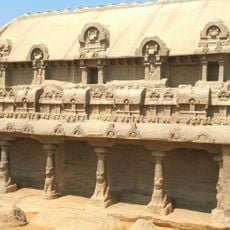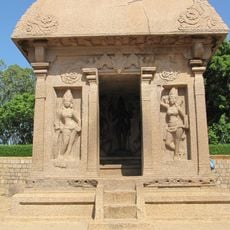
Dharmaraja Ratha, Rock-cut chariot monument in Mahabalipuram, Tamil Nadu, India
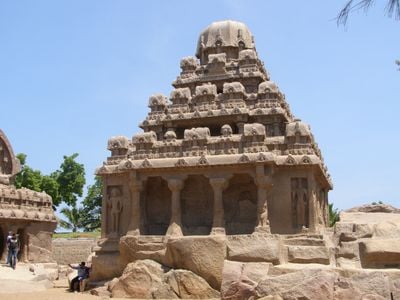
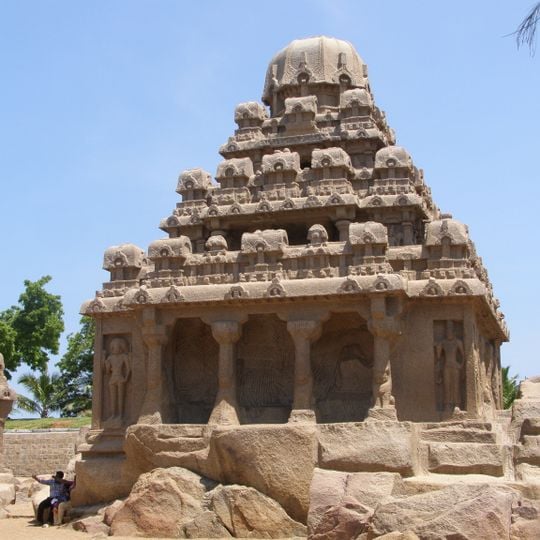
Dharmaraja Ratha is a three-storey rock-cut monument in Mahabalipuram, Kancheepuram district, Tamil Nadu, carved from a single block of pink granite. It faces west, measures 28 feet square at the base and rises 35 feet to the top of its terraced pyramidal roof, which ends in an octagonal shikhara. Two pillars and two pilasters support each facade, with seated lions on the pillar shafts and a carved figure in a niche on the outer walls.
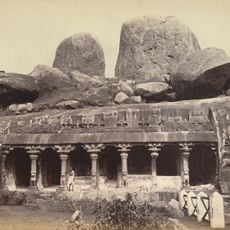
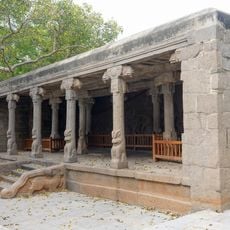
The monument was begun in the late 7th century under the Pallava ruler Narasimhavarman I and was left unfinished after his death. This period saw the Pallava dynasty produce several rock-cut works in the area around Mahabalipuram.
The name Dharmaraja comes from the eldest of the five Pandava brothers in the Mahabharata, though the carvings do not support this link. An inscription on the top tier calls the monument Atyantakama Pallavesvaram, a title of the Pallava king Paramesvaravarman I. Sixteen inscriptions in Grantha and Nagari scripts, mostly single-word royal titles, are cut into the stone.
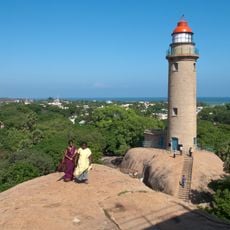
The monument is located in the coastal town of Mahabalipuram, south of Chennai, and is easy to reach by road. Visiting in the morning gives the best light for looking at the carvings on the stone surface.
The entire Dharmaraja Ratha was carved from a single block of pink granite, with no separate pieces joined together at any point. The interior was never finished, suggesting that the work began from the top downward and stopped without warning.
The community of curious travelers
AroundUs brings together thousands of curated places, local tips, and hidden gems, enriched daily by 94,082 contributors worldwide.