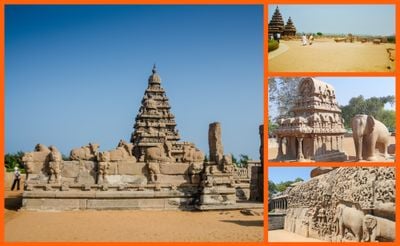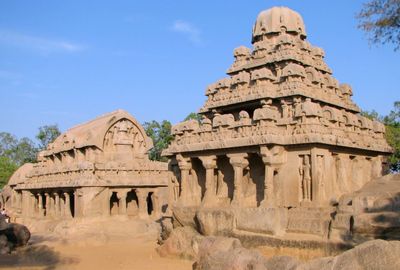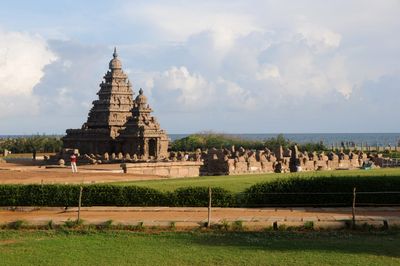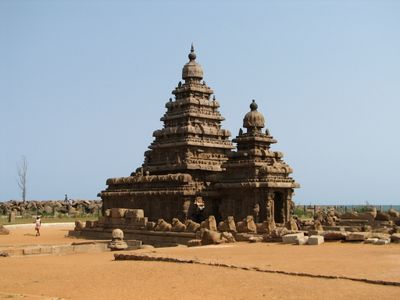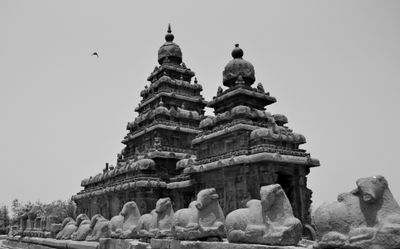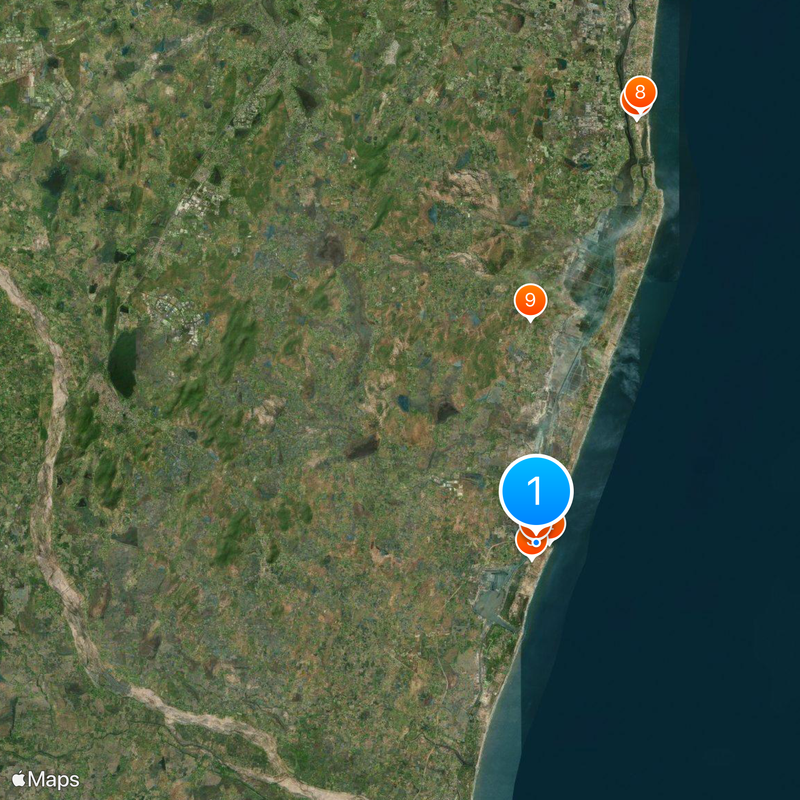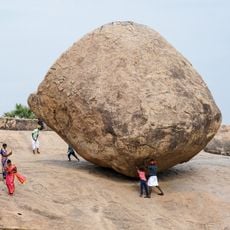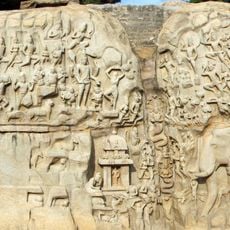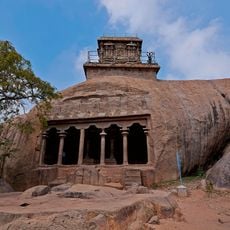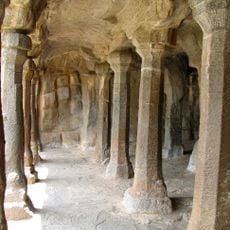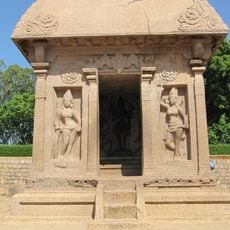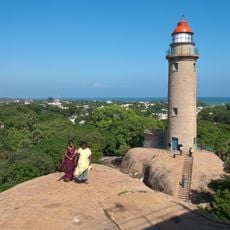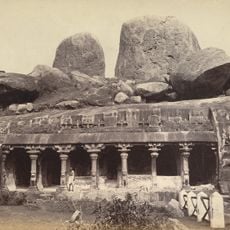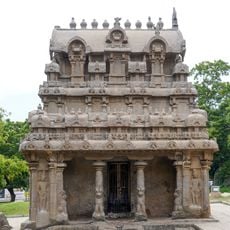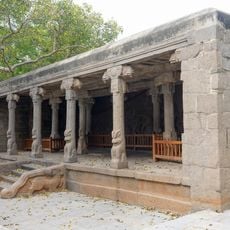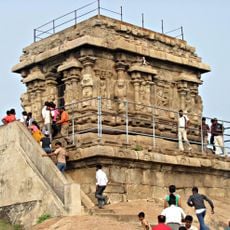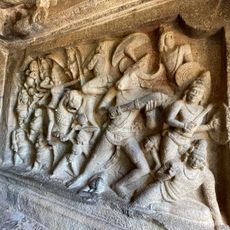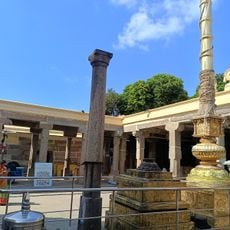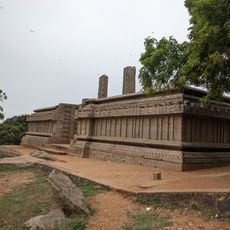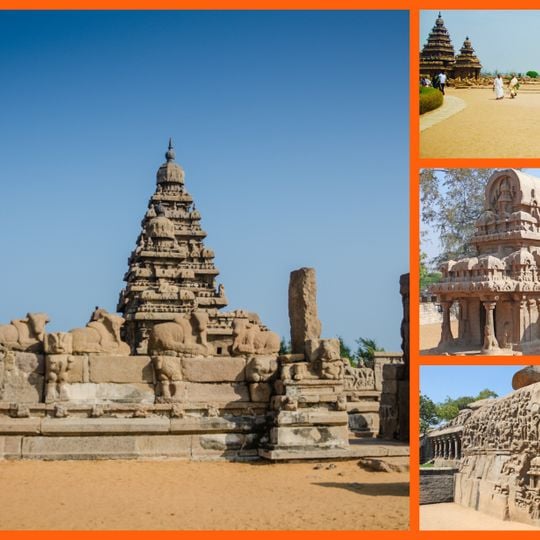
Group of monuments at Mahabalipuram, Temple complex in Mahabalipuram, India.
The complex includes numerous temples, rock sculptures, and freestanding stone chariots that spread along the coast and inland. The structures consist of caves carved directly from rock, monolithic formations, and masonry shrines, together forming a landscape of granite and sandstone.
The Pallava dynasty began work on the temples and sculptures in the late 7th century, which continued across several generations. Later rulers added further elements until the site gradually lost its importance as a port and religious center.
The site takes its name from the Pallava king Narasimhavarman I., also called Mamalla, whose reign shaped the creation of most sanctuaries here. Visitors today still see Brahmins and pilgrims coming to certain temples to perform rituals or simply pray in the shrines.
Most visitors start early in the morning when the sun is not too high and the light brings out the rock reliefs particularly well. The paths between individual temples and shrines run partly over sand and uneven ground, so sturdy footwear is helpful.
Some stone chariots and caves remained unfinished, so visitors today can see the traces of stonecutters' work on smooth surfaces and partially carved columns. These incomplete sections clearly show how craftsmen proceeded to transform massive blocks into fine architecture.
The community of curious travelers
AroundUs brings together thousands of curated places, local tips, and hidden gems, enriched daily by 91,953 contributors worldwide.