Bhujia Fort, hilltop fort in Bhuj, Gujarat, India
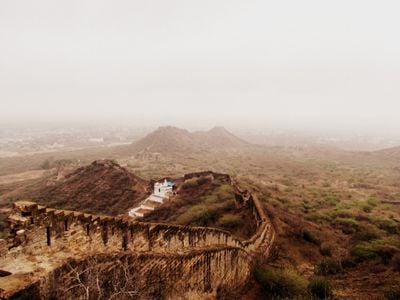
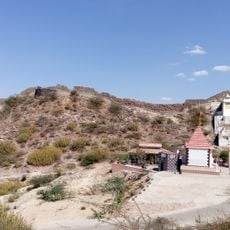
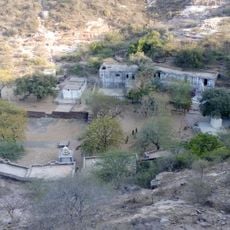
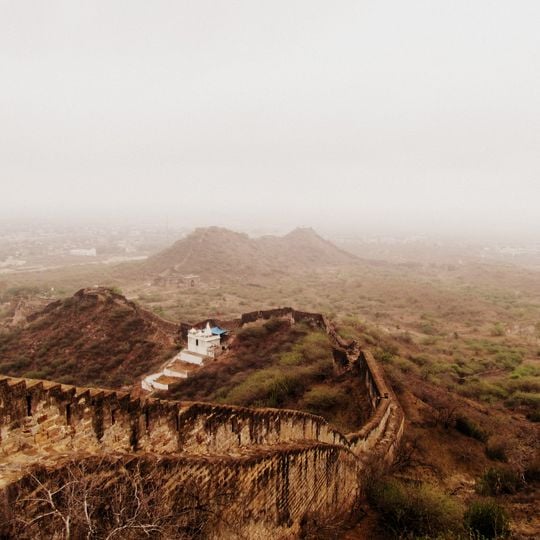
Bhujia Fort is a partly ruined fort on Bhujia Hill outside Bhuj, reached through two major gates. Its crenellated parapet wall of stone and brick runs along the ridge, with a paved walkway and a small white domed building inside the curve. Scattered buildings stand within an irregular area, and the top wall is weak and damaged.
Rao Godji I began building the fort as an outwork for Bhuj in 1715, but the main work and completion came under his son Deshalji I, who ruled from 1718 to 1741. Devakaran Sheth, Deshalji's diwan, led the fortification of the hill. The fort saw six major battles between 1700 and 1800, and Colonel William Coir took it in 1819 when Kutch accepted British suzerainty.
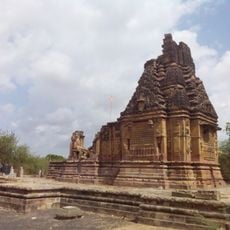
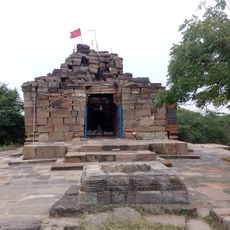
The Nag temple on the hill gave the fort its name, Bhujia, and its role in the first major battle: Naga Bawas entered through the gate pretending to worship there, then turned on Sher Buland Khan's army. Since that day their leader has held a place of honour in the Nag Panchami procession.
The visit requires climbing roughly 200 steps to reach the top, which demands physical effort and a reasonable amount of time. Wear sturdy footwear and bring water, as the elevated site offers minimal shade from the sun.
The fort's first major battle came early in Deshalji I's reign, when Mughal viceroy Sher Buland Khan invaded Kutch. A group of Naga Bawas entered through the gate on the pretext of worshipping at the Nag temple, then joined the fight and helped put his army to flight. Since then their leader has held a place of honour in the Nag Panchami procession.
The community of curious travelers
AroundUs brings together thousands of curated places, local tips, and hidden gems, enriched daily by 92,878 contributors worldwide.