Kutch Museum, Local museum in Bhuj, India
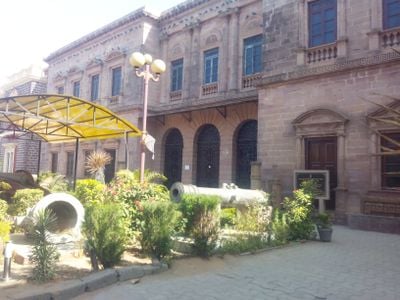
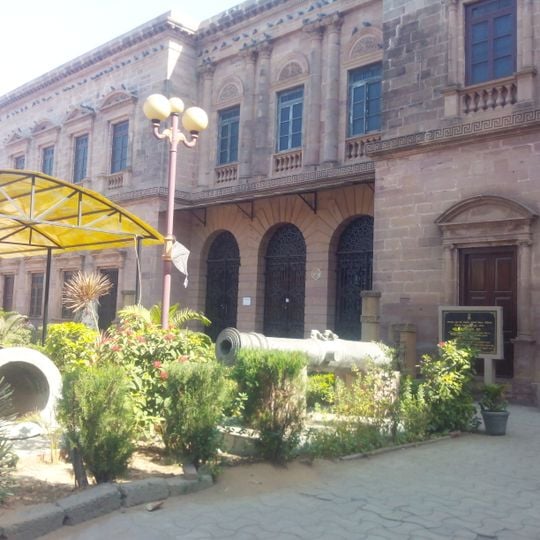
The Kutch Museum is a two-storey building of reddish-brown stone in Italian Gothic style, with a projecting upper section on columns, three arched ground-floor openings with iron lattice gates, and a recessed wooden door at the right. It was designed by state engineer Mc Lelland and built by local Mistris of Kutch under Jairam Ruda Gajdhar. Inside are about 11 sections, including archaeology, textiles, weapons, musical instruments and a shipping section.
The museum was founded in 1877 and arose from the initiative of a local ruler to collect the cultural treasures of the region. The building itself was constructed in Italian Gothic style and shows the architectural influence of outside powers during that era.
The museum keeps the only known Gujarati Abhira inscription, from the 3rd century, and examples of the extinct Kutchi script, now mostly written in Gujarati characters. Its coin collection includes the koris, the local currency of Kutch until 1948. A gallery of paintings records the different vocations of the region.
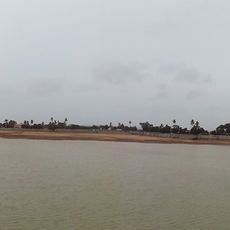
The museum faces Hamirsar Lake, just across from Nazar Bagh Garden, in central Bhuj. The two-storey building has three arched ground-floor openings with iron lattice gates and a recessed wooden door at the right; the entrance plaque and a stone cannon stand outside. Until 1948 it opened to the public only on important religious occasions, so check current visiting days before setting out.
A large wooden elephant with seven tusks dating back to the 18th century and handcrafted in a local town is one of the most striking exhibits in the museum. This artwork demonstrates the craft skill of the region in earlier centuries.
The community of curious travelers
AroundUs brings together thousands of curated places, local tips, and hidden gems, enriched daily by 92,750 contributors worldwide.