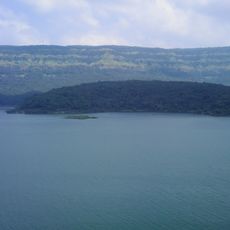
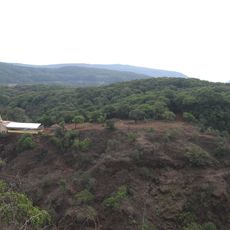
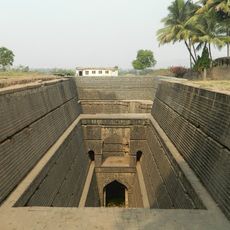
Bhushangad, Hillfort in Satara district, India.
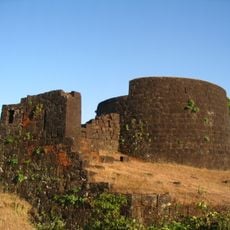
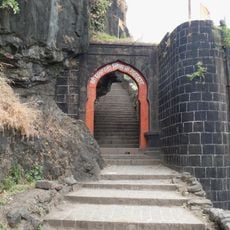
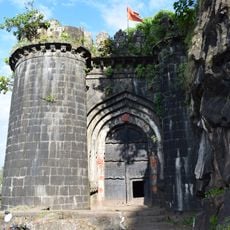
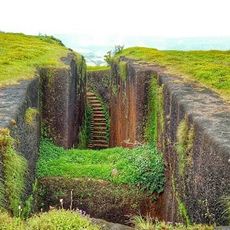
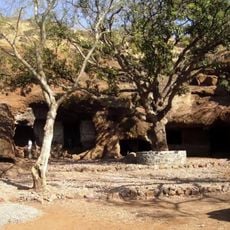
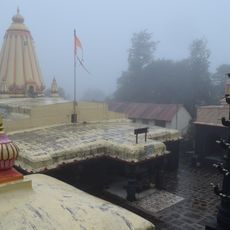
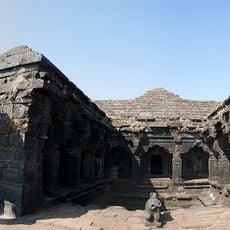
Bhushangad is a hillfort in Khatav taluk, Satara district, whose roughly triangular top is enclosed by a rampart with bastions at its three corners. A winding stairway and a gateway flanked by two bastions lead up; the gateway arch has collapsed. The Haranaidevi temple stands on the central rise, with a lamp pillar in front and a dharamshala beside it.
Bhushangad's origins are uncertain: local legend credits King Singhana of Devagiri (1210–1246), while construction is also attributed to Shivaji I in 1676, when Vardhangad, Sadashivgad and Machindragad were fortified. The fort later passed from Adilshahi to Shivaji's Maratha rule, then to Aurangzeb, and back to the Marathas.
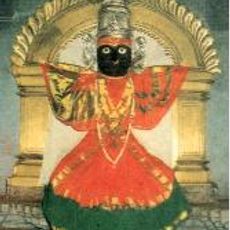
A temple inside the fort honors Haranaidevi, a form of the goddess Durga, and holds special meaning for the Kulkarni family. This sacred space shows how local religious beliefs remain part of daily life in the region.
Bhushangad lies about 25–30 km south of Vaduj, the taluk town of Khatav. From Vaduj, take a bus toward Pusesawali and get off at Palashi; from there a 5 km dirt path leads on foot to the fort. The climb from the base takes about 20 minutes. Water is scarce on the hilltop: a tank in a cave halfway up the eastern cliff is pumped to the top.
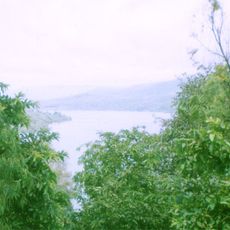
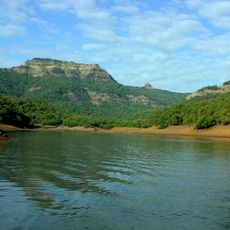
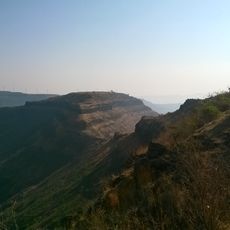
The fort's oval hilltop is cut off from every neighbouring hill, so lookouts could watch enemies far off in all four directions. From the top, the Yamai temple at Aundh, Mahimangad and Shikhar Shingnapur can be seen. Water is scarce: a tank lies in a cave halfway down the eastern cliff, and a pump lifts its water to the top.
The community of curious travelers
AroundUs brings together thousands of curated places, local tips, and hidden gems, enriched daily by 93,647 contributors worldwide.