Gemur Monastery, Tibetan Buddhist monastery in Lahaul and Spiti district, India.
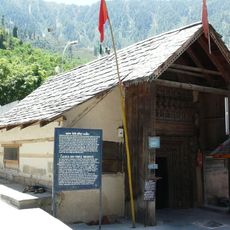
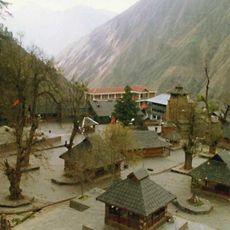
Gemur Monastery, also called Dge-smon Gsam-bstan chos-gling, stands at 3,370 m above Gemur village in the Bhaga River valley. Its temple holds a sculpture of Marichi Vajravarahi, miniature paintings, wall paintings, chortens and statues; the woodwork is credited to Tashi Tamphel.
Gemur Gompa is said to have been founded in the first half of the 17th century by sTagtshang Raspa, with legend crediting Lama Tanzin Paldan of Gemur village and the Thakurs of Khangsar with its construction. Scholars argue the original gompa stood at a higher altitude and that the present structure was moved to the lower hill in 1870. Its lamas belong to the Drukpa Kagyu sect, and lamas were sent from here to the gompas of Dartse, Chhukutsi, Zong, Khangsar and Photang in Jispa.
The monastery's Tibetan name is Dge-smon Gsam-bstan chos-gling, and its lamas belong to the Drukpa Kagyu sect. Lamas were sent from Gemur to the gompas of Dartse, Chhukutsi, Zong, Khangsar and Photang in Jispa. A thangka of Dam-can Jagpa Me-Len, a silk painting sewn by hand, was displayed here each year during the Tshechu festival until it was stolen in the 1960s.
Visiting requires a walk of about 700 meters from Gemur village, which sits roughly 17 kilometers from Keylong in the valley below. The warmer months offer the best access when mountain paths are easiest to navigate.
A thangka of Dam-can Jagpa Me-Len, a Tibetan Buddhist painting on silk cloth sewn by hand from silk patches, was stolen from the monastery with other valuables in the 1960s. It had been displayed each year during the Tshechu festival, when the cham dance was performed.
The community of curious travelers
AroundUs brings together thousands of curated places, local tips, and hidden gems, enriched daily by 92,677 contributors worldwide.