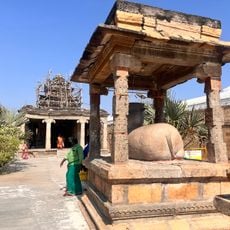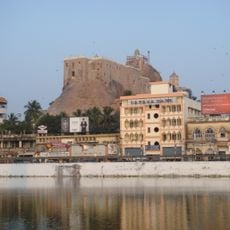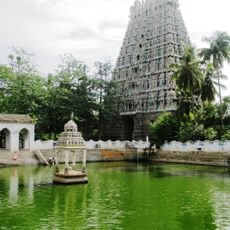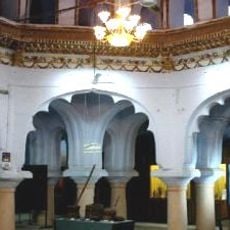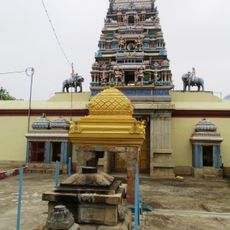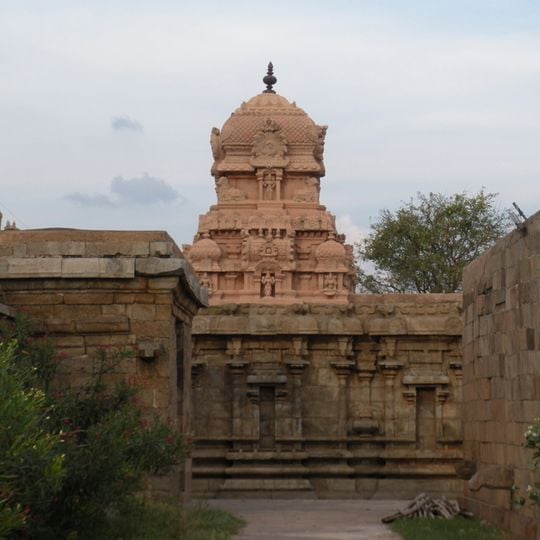
Erumbeeswarar Temple, Hindu temple in Tiruverumbur, India.
Erumbeeswarar Temple stands on a 60-foot granite hill reached by a flight of steps, with its two prakarams and a two-tiered rajagopuram on the summit. The east-facing sanctum holds a lingam made of a mud mound; a hall and the temple tank lie at the foothills.
Aditya I (871–907 CE) built the temple to mark his victory at Tirupurambiyam, part of a series of Chola temples along the Cauvery. Its 49 Chola inscriptions (850–1280 CE) include grants from 875 and 882–885 CE; a Kiliyurnadu chief provided the vimana. Malik Kafur failed to take it in 1311, and French troops used the hill in 1752.
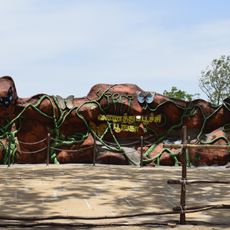
The name Erumbeeswarar comes from erumbu (ant) and Easwaran (Shiva), after the legend in which devas took ant form to worship here. Saint Tirunavukkarasar sang of the temple in the 5th and 6th Tirumurai, and every full moon pilgrims walk barefoot around the hill in girivalam.
Plan your visit by checking opening hours in advance and wear comfortable shoes since the site involves climbing to reach the main area. Bring sun protection and water, as shade is limited on the grounds.
The lingam in the sanctum is a mud mound, not stone, and abhisheka is poured only after a watertight metal cover is fitted over it. The northern side of the image is sloped and rough so that ants can climb, and marks of ants crawling over the lingam are still pointed out. The hill temple is one of three places where Shiva is said to have slid his head for his worshippers, the others being Virinjipuram and Thiruppanandal.
The community of curious travelers
AroundUs brings together thousands of curated places, local tips, and hidden gems, enriched daily by 92,669 contributors worldwide.