Lenyadri, Buddhist caves in Maharashtra, India
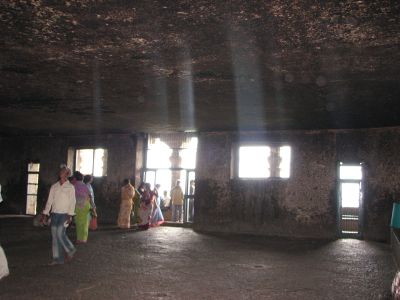
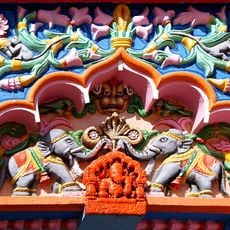
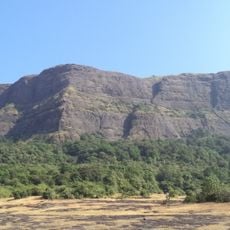
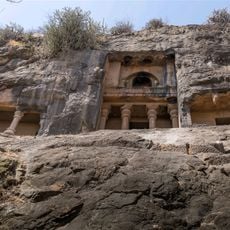
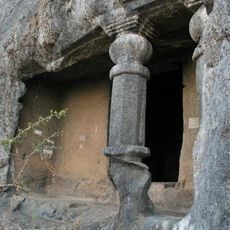
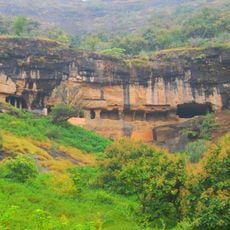
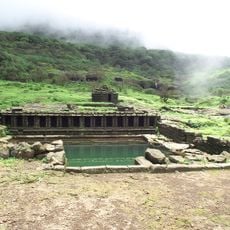
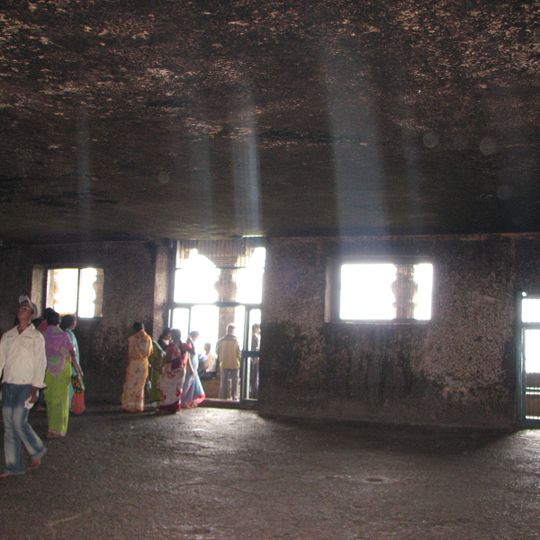
Lenyadri is a group of about 30 rock-cut Buddhist caves on a circular hill 4.8 km north of Junnar, in Pune district, Maharashtra. The caves face south and are numbered east to west; Cave 6 is a chaitya-griha with octagonal pillars and a stupa, while Cave 7 is the largest vihara around Junnar, an unpillared hall 17.37 m long and 15.54 m wide with 20 cells. Its rear wall holds the Ganesha shrine, entered through a pillared veranda.
The caves were excavated between the 1st and 3rd century AD, with Cave 6 and Cave 14 serving as chaitya-grihas and the rest as viharas. An inscription in Cave 14 records a donation by Ananda, grandson of Kapila and son of Tapasa. At an unknown later date the two central cells of Cave 7 were combined to house the Ganesha image, and the site became the Girijatmaja shrine of the Ashtavinayak circuit.
Cave 7 evolved from a Buddhist meditation space into a Hindu temple honoring Ganesha, now forming part of a sacred pilgrimage route that connects multiple shrines across the region.
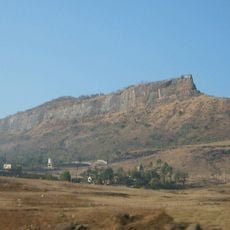
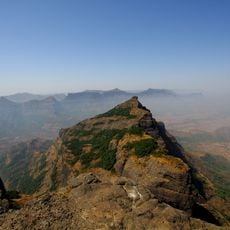
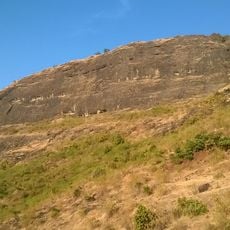
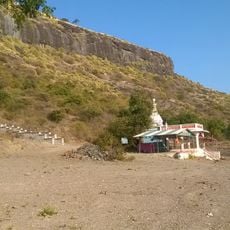
The climb to Cave 7 is made by 283 stone-masonry steps laid out in eight flights, built by devotees and said to represent the sensual pleasures Ganesha has overcome. The caves face south and are numbered from east to west, with Cave 7 the largest excavation around Junnar, about 30 metres above the plains. The site lies on the north-west bank of the Kukadi, about 4.8 km north of Junnar, and can also be approached through the Nanaghat pass.
The complex holds two prayer halls with strikingly different designs from separate construction periods. One preserves classical pillar structure while the other features an unusual flat roof design.
The community of curious travelers
AroundUs brings together thousands of curated places, local tips, and hidden gems, enriched daily by 92,742 contributors worldwide.