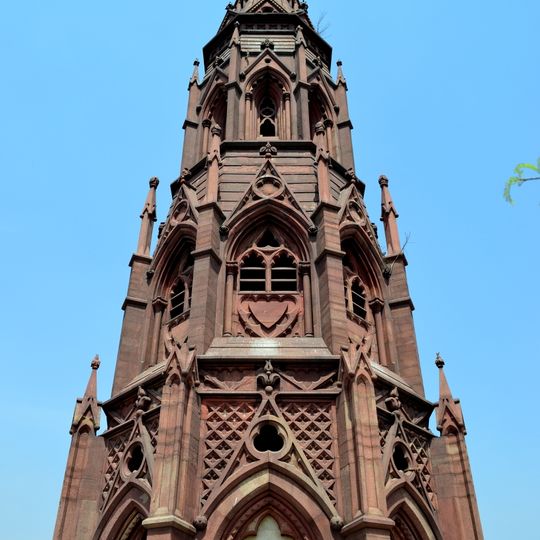
Mutiny Memorial, Monument of national importance in Delhi, India
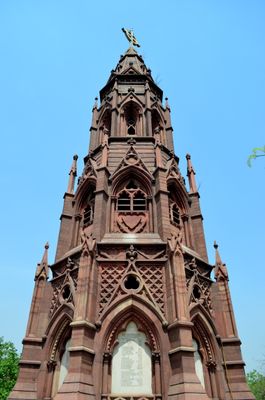
The Mutiny Memorial is a four-tiered red sandstone tower on an octagonal base, built in Gothic style. Its lowest tier has seven faces with memorial plaques and one face with stairs to the upper tiers. The tower ends in a small pointed spire with pinnacles, and its front face has a large ogee arch over two smaller arched openings and a blank shield.
The memorial was built in 1863 by the British Public Works Department to honor the soldiers of the Delhi Field Force who died during the Indian Rebellion of 1857. After independence, India renamed it in 1972 and added new plaques to reflect a different reading of the same events.
Since 1972 the memorial has also carried the name Ajitgarh, meaning 'unconquered fort' in Hindi. Older British inscriptions remain on the structure alongside newer plaques that honor the Indian fighters as martyrs, so both layers of history are visible at the same time.
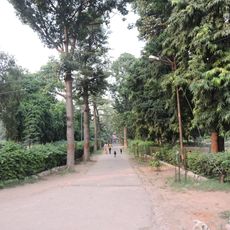
The entrance gate sits opposite Bara Hindu Rao Hospital, near Delhi University and the old Telegraph Building, which make it easy to find on foot. The monument stands on a raised ridge, so the walk up gives a good view of the surrounding area.
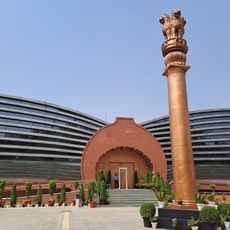
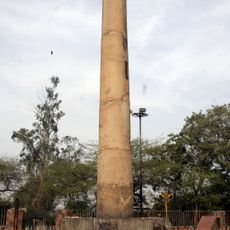
The tower was built taller than the nearby Ashoka Pillar, one of the oldest monuments in the area, and this was a deliberate choice by the British designers. Standing next to the Ashoka Pillar today, you can clearly see the difference in height between the ancient column and the newer Gothic tower.
The community of curious travelers
AroundUs brings together thousands of curated places, local tips, and hidden gems, enriched daily by 92,713 contributors worldwide.