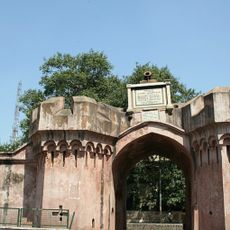
Delhi Public Library, Public library in Delhi, India
The Delhi Public Library is a public library in India's capital with its main building located opposite Old Delhi Railway Station. It maintains collections of books, periodicals, Braille materials, and digital media at multiple locations that are available to members for borrowing.
The library grew out of a 1944 request by General Sir Claude Auchinleck, to which Shri Ramkrishna Dalmia responded by funding most of a library building. In February 1950 the Indian government and UNESCO agreed to launch the project, and Prime Minister Jawaharlal Nehru opened the library on 27 October 1951. UNESCO handed operations to the Indian government in 1955; in 1968 the library refused a relocation demand tied to redevelopment of the station square.
The library's name is tied to its founding as a UNESCO-Indian government pilot project, and its early reading rooms were free to enter without registration until crowding forced a change of rules. It also runs a prison library at Tihar Jail and lends language-learning audio-visual material with playback equipment.
The Central Library sits opposite Old Delhi Railway Station, a site chosen for its dense station-side population. Registration is free but limited to people who live or work in Delhi; professionals such as doctors, lawyers and civil servants pay a set fee. Books are lent for 14 days and can be renewed once, in person or online, and the catalogue is available online.
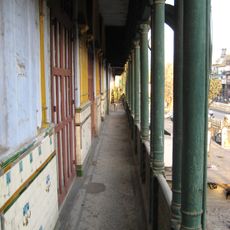
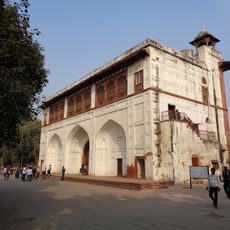
The Central Library occupies Dalmia Jain House, a single-storey building that had served as barracks for British troops and was never designed as a library. When the station square was widened in 1968, the library was told to move; staff resistance kept it in place. Its bookmobile, built in Delhi with an Austrian designer's help, is thought to be the first made in India.
The community of curious travelers
AroundUs brings together thousands of curated places, local tips, and hidden gems, enriched daily by 94,097 contributors worldwide.