Fatehpuri Masjid, Mughal mosque in Chandni Chowk, India
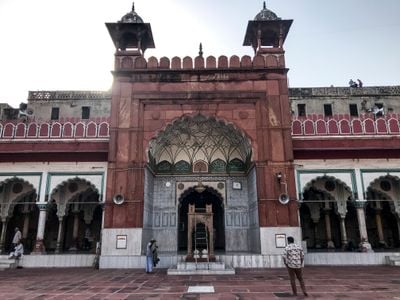
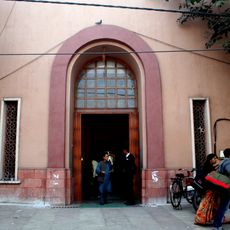
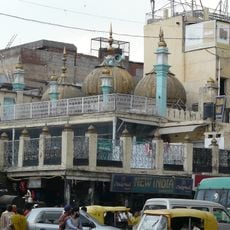
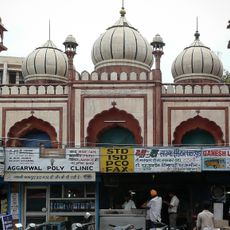
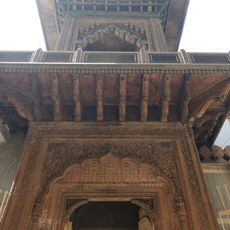
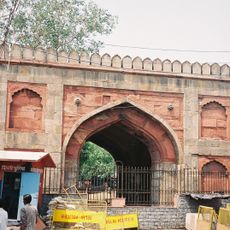
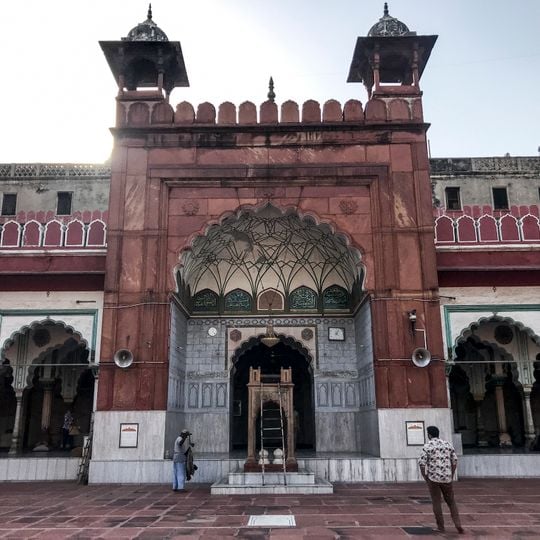
Fatehpuri Masjid is a red sandstone mosque whose facade carries two octagonal kiosks with small domed roofs, linked by crenellated battlements. A large arched portal, framed by a rectangular red sandstone band, has spandrels filled with a white and green geometric star pattern. Through the arch, a smaller opening reveals a gray marble interior with a wooden stepped structure; lower wings with white marble dados flank the portal.
Fatehpuri Begum, a wife of Shah Jahan from Fatehpur Sikri, built the mosque in 1650. After the 1857 war the British auctioned it to Rai Lala Chunnamal for Rs. 19,000; in 1877 the government took it back in exchange for four villages and returned it to Muslims at the Delhi Durbar. The Khari Baoli spice market grew up after its construction.
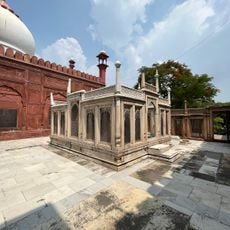
The mosque is named after Fatehpuri Begum, a wife of Shah Jahan from Fatehpur Sikri; the mosque in the Taj Mahal complex also bears her name. Mufti Mukarram Ahmad serves as chief mufti and hereditary imam, succeeding his father Maulana Mufti Mohammad Ahmad (d. 1971/72). The grave of the wife of freedom fighter Maulana Abdul Qadir Ludhianvi lies in the courtyard. Id-ul-Fitr and Id-ul-Zuha are celebrated here.
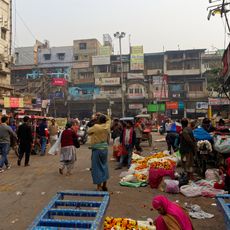
The mosque is positioned at the western end of Chandni Chowk and welcomes visitors during non-prayer hours while requesting modest dress. Visiting in early morning or late afternoon hours allows for easier exploration when prayer activities are less frequent.
After British authorities auctioned the mosque, the Chunnamal family purchased it, and their descendants continue to live in the adjoining Chunnamal Haveli residence. This intertwining of family continuity with religious space reveals how local communities adapted to major historical shifts.
The community of curious travelers
AroundUs brings together thousands of curated places, local tips, and hidden gems, enriched daily by 92,654 contributors worldwide.