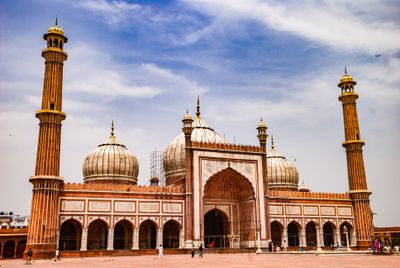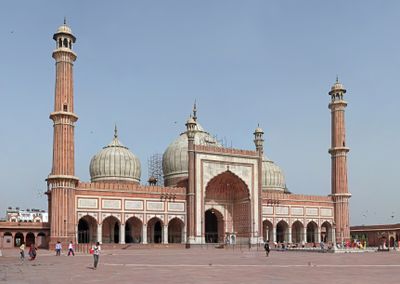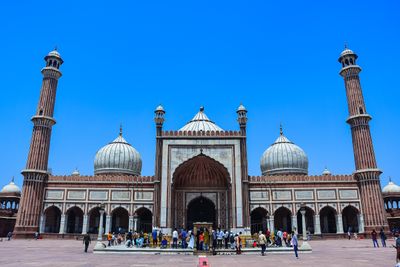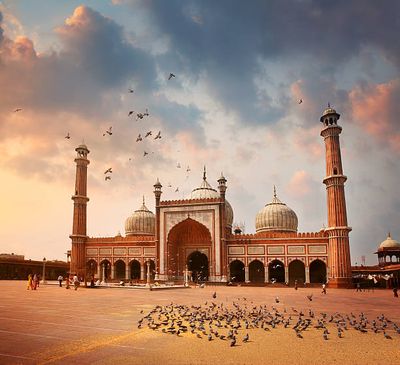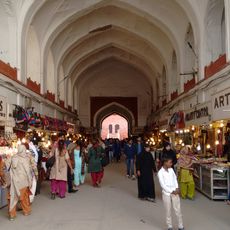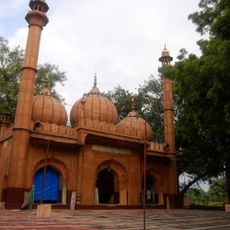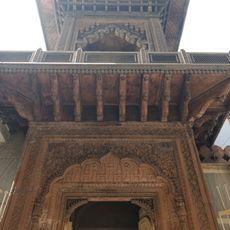
Jama Masjid, Delhi, Principal mosque in Old Delhi, India
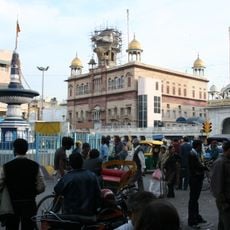
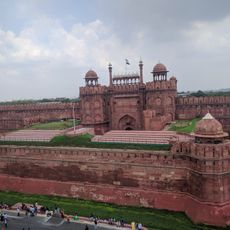
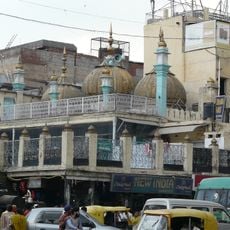
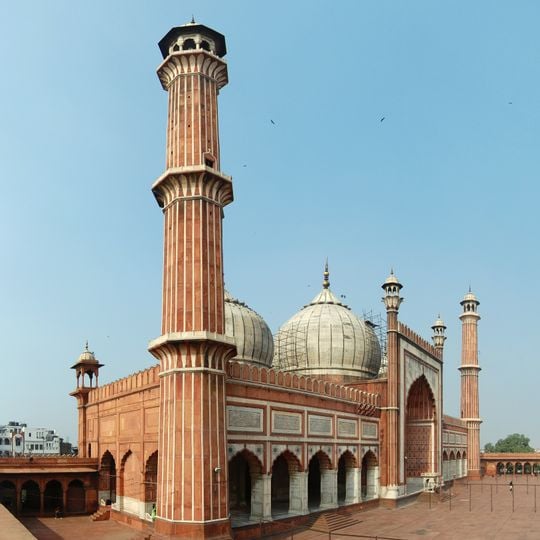
The red sandstone and marble mosque features three domes, two minarets reaching 40 meters high, and a courtyard accommodating 25,000 worshippers.
Shah Jahan, who also constructed the Taj Mahal, completed this final architectural project in 1656 after employing 5,000 workers over twelve years.
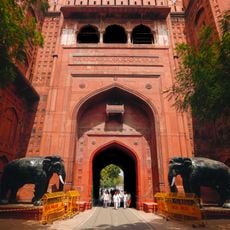
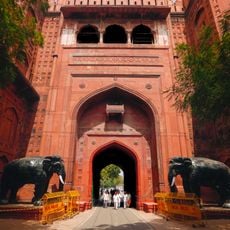
The eastern gate formerly served royal entries, while the northern and southern gates welcomed regular worshippers for daily prayers and Friday gatherings.
The mosque opens daily from 7 AM to noon and 1:30 PM to 6:30 PM, with an entrance fee of 300 rupees for international visitors.
The prayer hall contains seven mihrabs and Persian calligraphic inscriptions across its 90 by 200 feet interior space.
Location: Central Delhi district
Inception: 1656
Architectural style: Islamic architecture
Made from material: sandstone
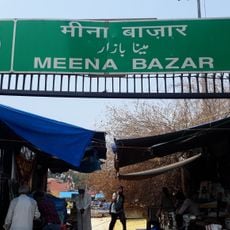
Address: Meena Bazaar Delhi
Opening Hours: Lundi-Dimanche 07:00-12:00, 13:30-18:30
Phone: +911123365358
Website: http://jamamasjid.in
GPS coordinates: 28.65083,77.23306
Latest update: May 30, 2025 15:54
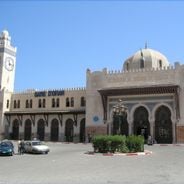
The neo-Moorish architecture developed in the 19th and early 20th centuries, driven by European interest in oriental forms. This architectural movement combines Western building elements with Moorish decorative motifs: horseshoe arches, carved arabesques, geometric mosaics, and ornate stuccoes. This stylistic synthesis appears in a variety of structures, from places of worship to private residences, theaters, and city fortifications. The collection gathers representative examples from across Europe and beyond. In Marseille, the Alcazar Grand Theatre has displayed a façade decorated with oriental patterns since 1857. The Great Synagogue of Brussels, inaugurated in 1878, demonstrates the adoption of this style in Belgian religious architecture. In Germany, Drachenburg Castle near Bonn incorporates Moorish elements into a late 19th-century villa. The movement also reaches unexpected locations: Brighton’s Royal Pavilion blends Indian and Islamic influences for a British royal seaside residence, while rural farms in Hälsingland, Sweden, include ornaments inspired by this orientalist trend. From Pena Palace overlooking Sintra to the Justo Sierra Synagogue in Mexico city, these buildings exemplify the international spread of an architectural style that profoundly marked its period.
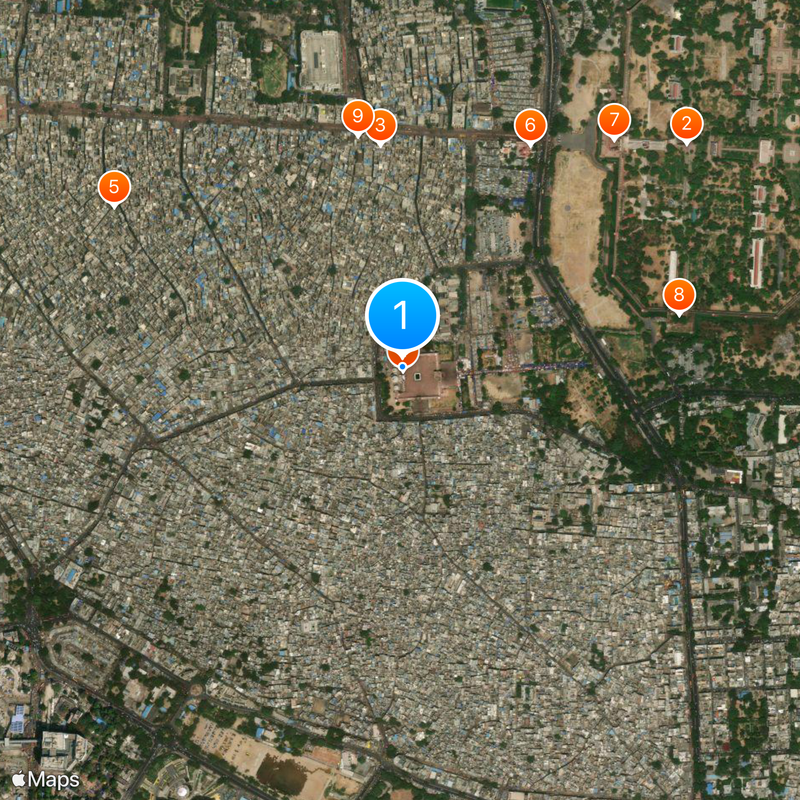
Red Fort
899 m
Old Delhi
1.1 km
Gurdwara Sis Ganj Sahib
556 m
Diwan-i-Am
1.1 km
Chunnamal haveli
9 m
Ghalib ki Haveli
823 m
Sri Digambar Jain Lal Mandir
637 m
Delhi Public Library
1 km
Lahore Gate
774 m
Delhi Gate
700 m
Delhi Stock Exchange
974 m
Sunehri Masjid
586 m
Dariba Kalan
510 m
Red Fort Archaeological Museum
1.1 km
Delhi Town Hall
884 m
Naubat Khana
953 m
Urdu Bazar
128 m
Indian War Memorial Museum
624 m
Chhatta Chowk
823 m
Shahi Sunehri Masjid
645 m
Central Baptist Church, Delhi
604 m
Naya Mandir
250 m
Panja Sharif, Delhi
0 m
Ajmeri Gate
1 km
Tomb of Razia Begum
550 m
Indian War Memorial Museum
955 m
Holy Trinity Church, Delhi
906 m
Bahi Mati Dass museum
639 mReviews
Visited this place? Tap the stars to rate it and share your experience / photos with the community! Try now! You can cancel it anytime.
Discover hidden gems everywhere you go!
From secret cafés to breathtaking viewpoints, skip the crowded tourist spots and find places that match your style. Our app makes it easy with voice search, smart filtering, route optimization, and insider tips from travelers worldwide. Download now for the complete mobile experience.
A unique approach to discovering new places❞
— Le Figaro
All the places worth exploring❞
— France Info
A tailor-made excursion in just a few clicks❞
— 20 Minutes