Tomb of Mariam-uz-Zamani, Mughal mausoleum in Sikandra, India
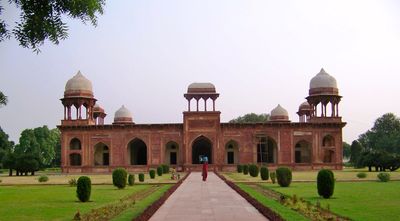
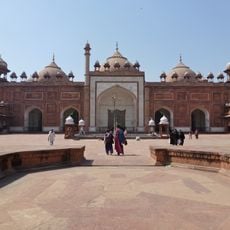
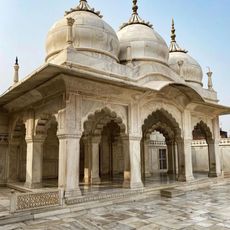
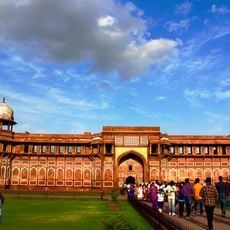
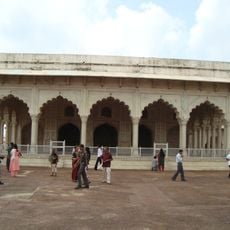
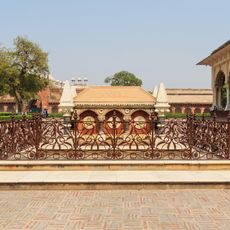
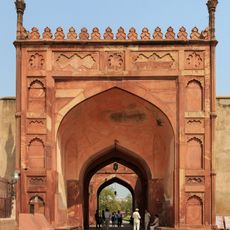
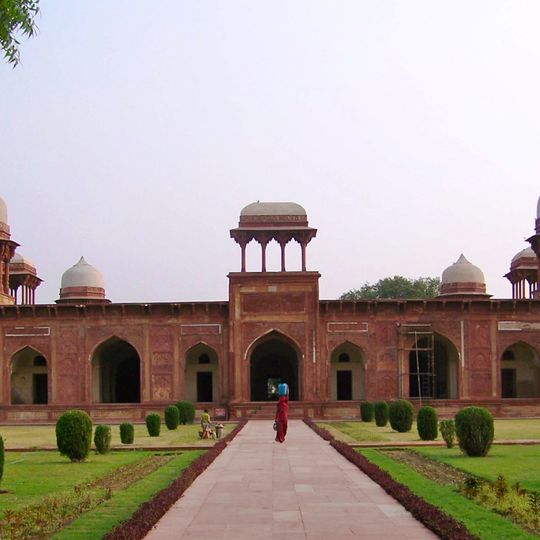
The Tomb of Mariam-uz-Zamani stands in the centre of a Mughal garden in Sikandra, on a raised platform reached by stairs on its north and south sides. It is built of brick and mortar finished with stucco, its facades clad in red sandstone panels with a chhajja and corner balconies. Two corridors crossing east-west and north-south divide the interior into nine sections, with forty chambers on the ground floor. Four octagonal chhatris of red sandstone with white domes sit at the corners.
Construction began in 1623, four years after the death of the person buried here, and was completed in 1627 under the reign of her son Jahangir. The ruler's mother was the wife of Akbar and came from a Rajput family.
The title Mariam-uz-Zamani, meaning Mary of the Age, was conferred on Harkha Bai after the birth of her son Jahangir in 1569. Her name later led some writers to assume she was Christian; when Edmund Smith opened the crypt, he found no trace of a cross. Her granddaughter Bahar Banu Begum is buried in the same mausoleum.
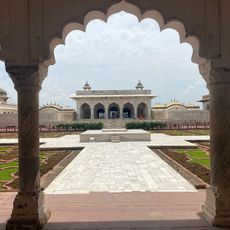
The tomb stands in the centre of a Mughal garden in Sikandra, beside Akbar's tomb on the road toward Mathura. Stairs on the north and south sides lead up to the raised platform. Inside, corridors running east-west and north-south divide the ground floor into nine sections, with the empress's cenotaph at the centre and some forty chambers around it.
At the corners of the roof stand octagonal towers with white domes, which stand out from the red color of the rest of the building. Remnants of old wall paintings are still visible on the plastered walls.
The community of curious travelers
AroundUs brings together thousands of curated places, local tips, and hidden gems, enriched daily by 94,664 contributors worldwide.