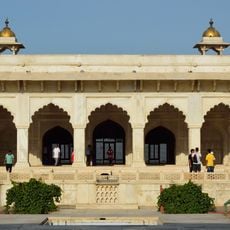
Agra Fort, 16th century fort in Agra, India
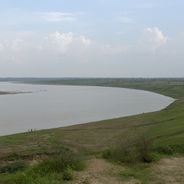
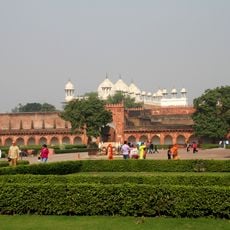
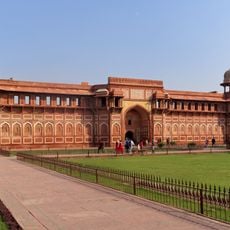
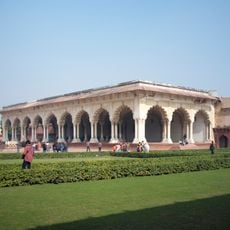
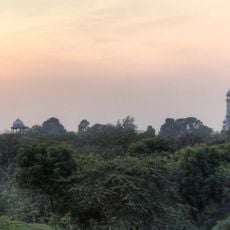
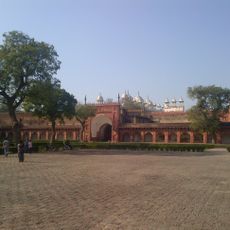
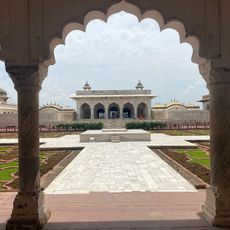
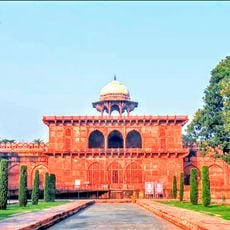
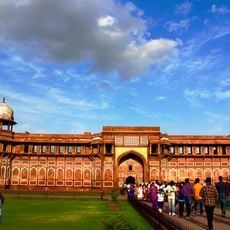
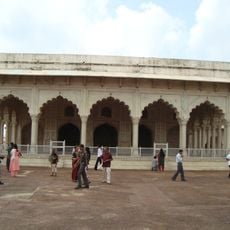
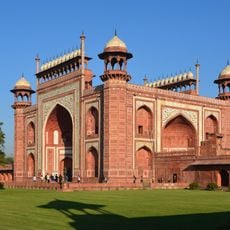
Agra Fort is a large red sandstone fortress built on a bend of the Yamuna river in northern India. Behind its high walls lie several levels of courtyards, palace halls, and open pavilions arranged across a broad compound.
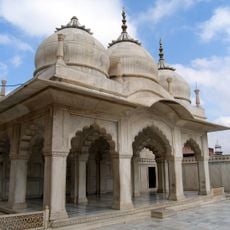
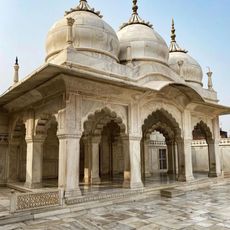
A brick fort stood here by 1080; Akbar had it rebuilt in red sandstone from Barauli between 1565 and 1573, with about 4,000 workers daily. Shah Jahan added white marble palaces after 1628, then moved the capital to Delhi in 1638. Aurangzeb confined him in the Musamman Burj until his death in 1666.
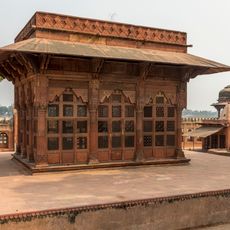
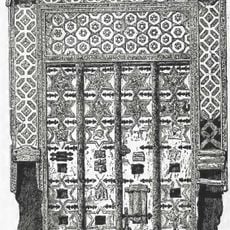
The fort's name Lal-Qila, "Red Fort", comes from the red sandstone Akbar quarried at Barauli in Dhaulpur, Rajasthan. Carvings inside mix Rajput and Islamic motifs, and some panels show dragons, elephants and birds, figures normally avoided in Islamic ornament. The Delhi Gate's inner passage, Hathi Pol, is flanked by two stone elephants with guards.
The main entrance is on the western side, and the visit naturally flows from there through a series of courtyards and halls. Plan for at least two hours if you want to reach the far pavilions and the riverside terraces.
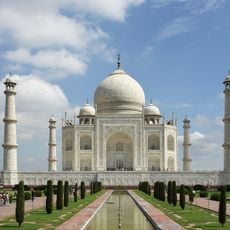
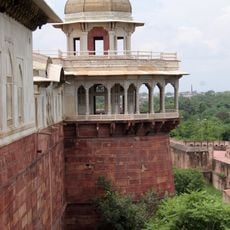
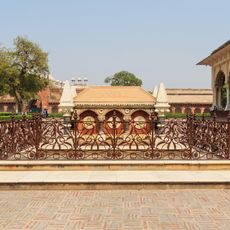
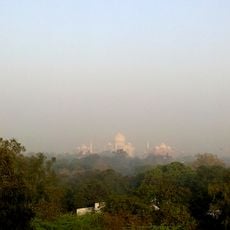
The Musamman Burj, an octagonal tower with a marble balcony facing the Taj Mahal, is where Aurangzeb held Shah Jahan under house arrest until his death in 1666. Sources call the story of the emperor gazing at the Taj Mahal a legend, not a recorded fact.
The community of curious travelers
AroundUs brings together thousands of curated places, local tips, and hidden gems, enriched daily by 92,164 contributors worldwide.