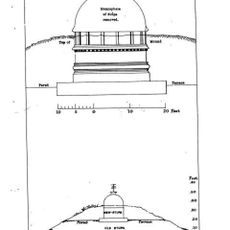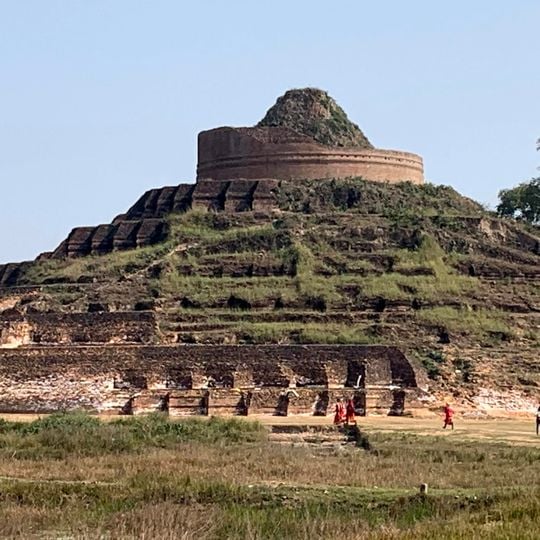
Kesariya stupa, building in India
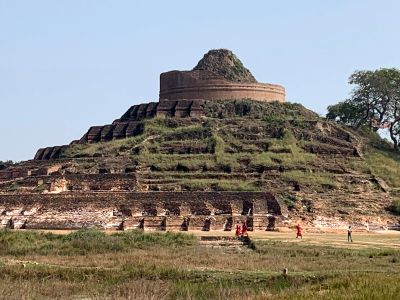
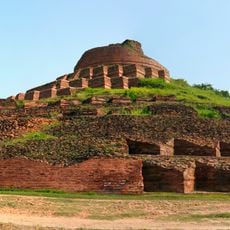
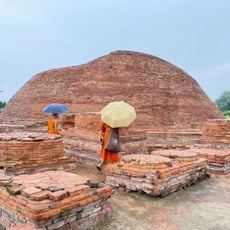
Kesariya stupa is a large ancient brick structure about 32 meters tall (105 feet) in East Champaran, shaped like a giant domed hill with multiple terraces and a symmetrical circular design. Remains of Buddha statues in meditation postures can be found in the preserved monastic cells within the monument.
The stupa was built during Emperor Ashoka's reign in the 3rd century BCE as a supporter of Buddhism who created it to house sacred Buddha relics. Later expansion occurred during the Gupta period, and it remained a major pilgrimage site for centuries along important trade routes.
The name comes from a local legend about Buddha's sacred alms bowl given to the Licchavis before his final journey. Pilgrims from across Asia visit to perform circumambulation rituals and participate in annual festivals, keeping Buddhist traditions alive at the site.
The best time to visit is from September to April when weather is cooler and less humid, allowing for comfortable walking around the terraces. Respectful behavior is essential: avoid touching or climbing the ancient stones, keep the area clean and quiet, and follow local customs.
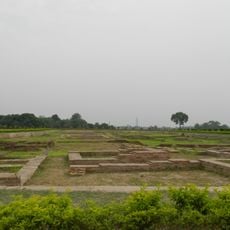
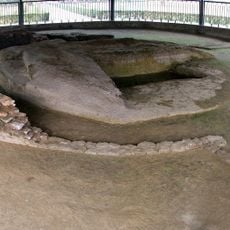
Archaeological excavations in the 1990s revealed a previously unknown terrace level below the current ground, indicating the original stupa was even larger than what is visible today. A distinctive crescent-shaped circumambulation pathway discovered at the site differs from other Indian stupas and reflects ancient innovative architectural thinking.
The community of curious travelers
AroundUs brings together thousands of curated places, local tips, and hidden gems, enriched daily by 92,644 contributors worldwide.