Necropoli Etrusca del Crocifisso del Tufo, Etruscan necropolis and archaeological site in Orvieto, Italy
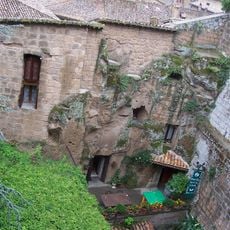
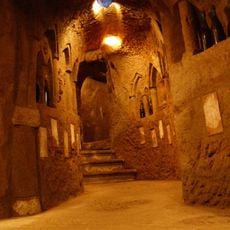
The Necropoli Etrusca del Crocifisso del Tufo is an Etruscan necropolis at the foot of the Orvieto cliff, with over 200 chamber tombs built of tuff blocks, each about 3 by 2 metres. The tombs line orthogonal burial streets, and most are reached by three steps leading down to benches along the back and one side wall. Their roofs are corbelled pseudo-vaults held by earth packed above.
The necropolis was used from the 8th to the 3rd century BC, with its greatest extent between the mid-6th and mid-5th centuries BC, when the orthogonal grid of family tombs was laid out. Excavations began in the 19th century, largely unsystematically, scattering finds to museums across Europe and America; scientific investigation resumed in 1961. Riccardo Mancini, an Orvieto native working on Etruscan sites since the 1870s, is credited with discovering the necropolis on his property.
The tomb chambers display family names carved in the Etruscan language using Greek letters, revealing how ancient families identified themselves. These inscriptions offer a window into the social structure and naming customs of the time.
The site is easy to explore on foot and allows for a self-paced walk through the tomb chambers at your own speed. The best time to visit is during spring and autumn months when temperatures are mild.
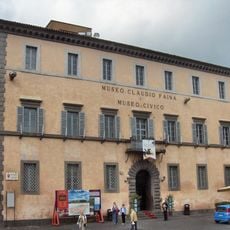
The tombs were found in the 1870s by Riccardo Mancini, an Orvieto native who had worked on Etruscan sites since that decade and came upon the necropolis on property he inherited. It had lain unknown for over 2000 years. Early digs were disorganised, scattering finds to museums across Europe and America; part of the material was bought and is now in the Museo Faina in Orvieto.
The community of curious travelers
AroundUs brings together thousands of curated places, local tips, and hidden gems, enriched daily by 94,244 contributors worldwide.