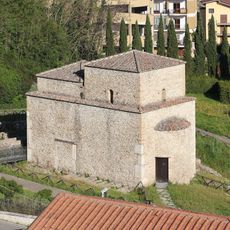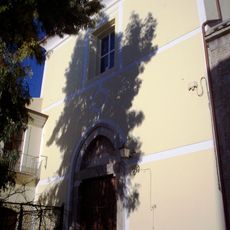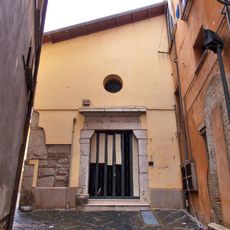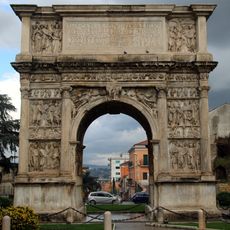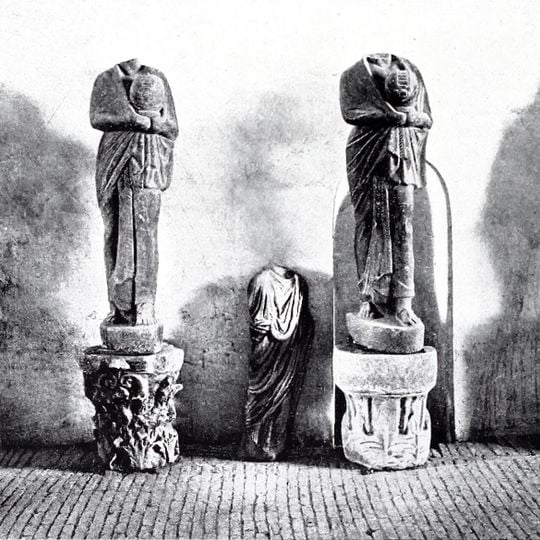
Temple of Isis, Roman temple in Benevento, Italy
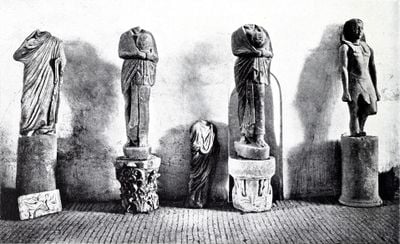
The Temple of Isis is a Roman sanctuary from the 1st century that once housed Egyptian sculptures and monumental art. A columned avenue approached the main shrine, which was surrounded by statues, reliefs, and obelisks imported from Egypt.
The temple stood in Benevento, not Rome, and was erected by Emperor Domitian between 88 and 89 AD, as the inscriptions on two late-Egyptian obelisks in the city record. The obelisks name Isis as "Lady of Benevento", showing her cult was already rooted there before the temple. No excavation has ever located the building; its sculptures came to light from the late 19th century, notably in 1903 behind the former convent of Sant'Agostino.
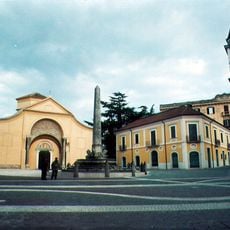
The two obelisks now in Benevento, one on Piazza Papiniano and one in the Museo del Sannio's Isis section, call the goddess "Lady of Benevento", showing her cult was already rooted before Domitian's temple. The cult reached the city through trade routes from Pozzuoli and the Aegean, and its priests and priestesses are known from kneeling statues found in 1903.
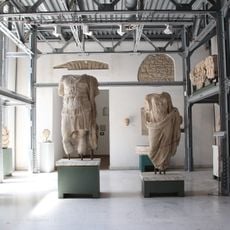
No excavation has ever located the temple itself, so the finds are what remains to see. Most are held in the Museo del Sannio, in a section detached at the Museo d'Arte Contemporanea Sannio (ARCOS). One obelisk stands on Piazza Papiniano; the incomplete second one is in that museum section.
The 1903 find behind the former convent of Sant'Agostino yielded 21 sculptures of Egyptian material and style, plus four Egyptian-Hellenistic statues and three marble sphinxes now in the Museo Barracco in Rome. The Egyptologist Hans Wolfgang Müller catalogued these finds in 1969 and called Benevento, with Rome, the largest centre of Egyptian discoveries outside Egypt.
The community of curious travelers
AroundUs brings together thousands of curated places, local tips, and hidden gems, enriched daily by 94,016 contributors worldwide.