Abbey of Saint Mary of Maniace, Romanesque abbey in Bronte, Italy
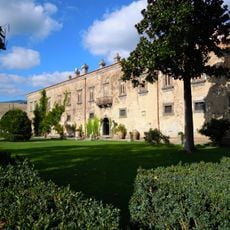
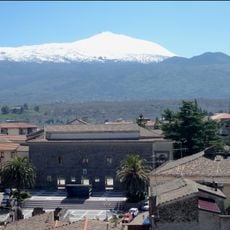
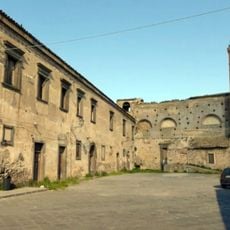
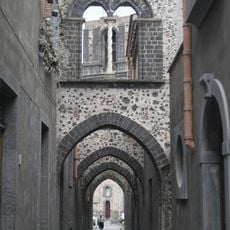
The Abbey of Saint Mary of Maniace stands in the countryside between Bronte and Maniace. Founded in the 12th century, it was rebuilt after the 1693 Val di Noto earthquake, so the church and the adjoining noble apartments combine medieval remains with later work. From 1799 the complex served as the Nelson ducal residence, and it now houses the Maniace Museum.
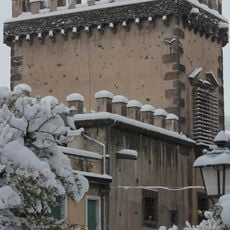
A small cenobium founded after Giorgio Maniace's 1040 victory was abandoned, perhaps after the 1169 earthquake. In 1172 Queen Margaret of Navarre established a Benedictine abbey there, with William of Blois as first abbot; Cistercian rule is documented in 1296, a fortilicium in 1373 and a turris in 1422. The 1693 Val di Noto earthquake damaged the buildings, and the rebuilding altered part of the original layout.
The name Maniace honours the Byzantine general Georgios Maniakes, who fought here in 1040; the nearby river was renamed Saracena after the blood shed in that battle. Queen Margaret of Navarre founded the Benedictine abbey in 1172, and the Frenchman William of Blois was its first abbot. The abbey later passed to the Basilians, then to the Augustinian hermits and the Franciscans, and in 1799 the estate and the title Duke of Bronte went to Horatio Nelson.
The complex lies on the border between Bronte and Maniace, in the metropolitan city of Catania, and is now run as the Museum of Maniace. The former abbey and castle stand in open countryside, so reaching it means arranging your own transport from Catania or Bronte rather than relying on a direct city bus. The buildings were damaged in 1943 and later stripped of furnishings, so expect partly empty interiors.
The Scottish poet William Sharp, who wrote under the name Fiona Macleod, spent his last years in the castle and died there in 1905; he is buried in the park. Allied troops damaged the building during the landing on Sicily in 1943, and in the 1980s the Region of Sicily and the municipality of Bronte took over the estate, which had been looted, and turned it into the Museum of Maniace.
The community of curious travelers
AroundUs brings together thousands of curated places, local tips, and hidden gems, enriched daily by 92,613 contributors worldwide.