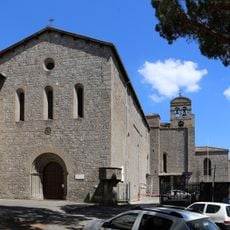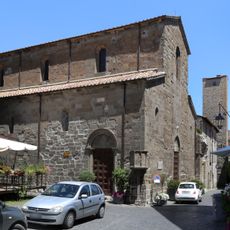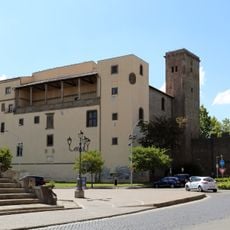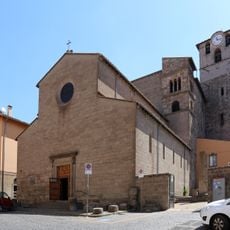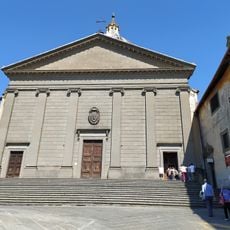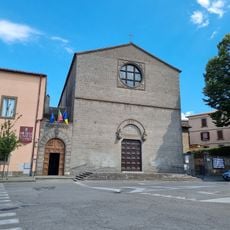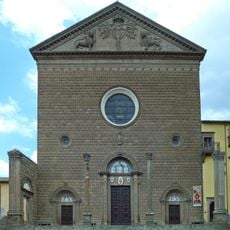
Santa Rosa, Neoclassical church and shrine in Viterbo, Italy
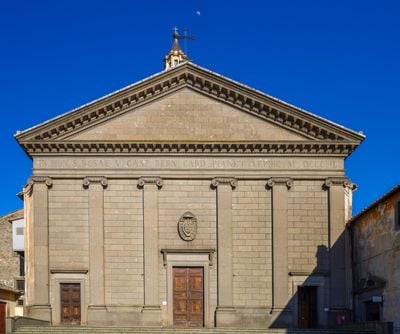
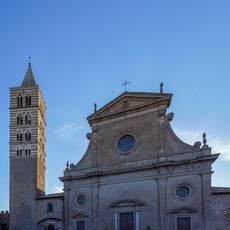
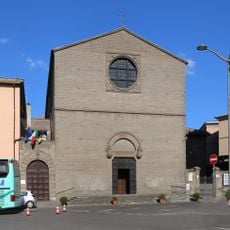
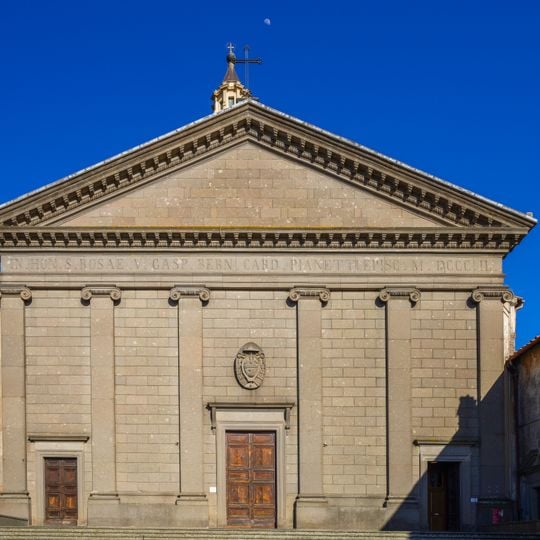
Santa Rosa is a neoclassical church rebuilt in 1850, with a three-nave interior and a dome added in 1913 by Arnaldo Foschini, originally covered in majolica tiles later hidden under lead. Most works inside date from the second half of the 19th and early 20th centuries. A plaque at the end of the right nave records the consecration on 25 August 1850.
A church dedicated to Santa Maria was first recorded in 1235; in 1258 Alexander IV moved the body of Saint Rose there and it took her name. Rebuilt after mid-14th-century destruction, it was decorated with frescoes by Benozzo Gozzoli, lost when the building was redone in 1632. The present neoclassical church was built in 1850, consecrated on 25 August 1850, and received its dome in 1913, designed by Arnaldo Foschini.
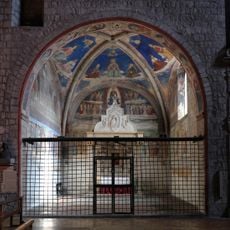
The church holds the tomb of Saint Rosa of Viterbo in a metal and glass case, drawing pilgrims from across the region. The place remains deeply tied to the veneration of this local saint and continues to shape the city's religious life.
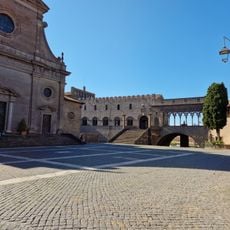
The church is located near other historical sites in Viterbo's center, making it easy to visit multiple places in one outing. The downtown area is compact and walkable, allowing for convenient exploration of the surrounding neighborhood.
The body of Saint Rose lies in a gilded bronze urn flanked by two praying angels, made in 1699; after nearly eight centuries it is largely intact, dressed in a silk tunic that the nuns of the adjoining monastery replace from time to time. A plaque at the end of the right nave records the church's consecration on 25 August 1850.
The community of curious travelers
AroundUs brings together thousands of curated places, local tips, and hidden gems, enriched daily by 94,432 contributors worldwide.