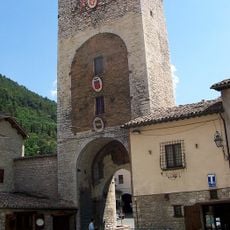
Ikuvium, Archaeological site in Gubbio, Italy.
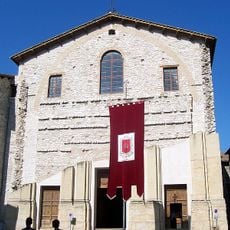
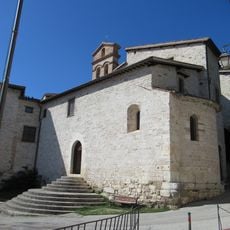
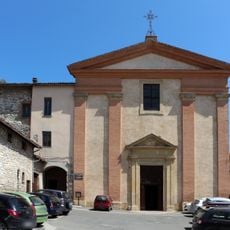
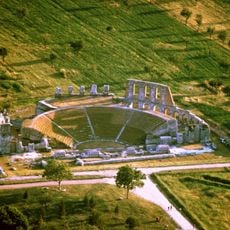
Ikuvium is the archaeological site of an ancient Umbrian city-state corresponding to present-day Gubbio. Its remains lie outside the ancient walls and include a theater, a circular structure 9 metres high that may be a mausoleum or temple, and three series of coins. The Camignano stream divided the settlement into Certense, the nobles' quarter, and Colonia, the artisans' and farmers' quarter toward the mountain.
Ikuvium was an Umbrian city-state that stayed neutral in the wars between Rome and the Samnites, Etruscans and Senones, and did not fight at the Battle of Sentinum in 295 BC. This neutrality led to its peaceful submission to Rome, and in 82 BC it became a Roman municipium. The Camignano stream divided the town into Certense, where nobles lived, and Colonia, the artisans' and farmers' quarter toward the mountain.
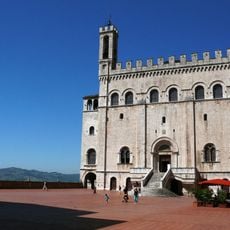
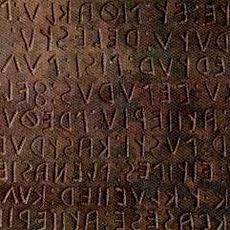
The seven bronze tablets known as the Iguvine Tables were found in 1444 and are kept in the museum of the Palazzo dei Consoli in Gubbio. Their text is in the Umbrian language, written partly in the Etruscan alphabet and partly in the Latin alphabet.
The archaeological site lies in Gubbio, the ancient Ikuvium, with remains including a theater outside the old walls and a circular structure 9 meters high. The Camignano stream once divided the settlement into the noble Certense quarter and the artisan Colonia quarter toward the mountain. The Eugubine Tablets and three series of coins are kept in the museum of the Palazzo dei Consoli in Gubbio.
Ikuvium's circular structure, standing 9 metres high outside the ancient walls, may have been a mausoleum or a temple; its purpose is still debated. The Eugubine Tablets, seven bronze panels found in 1444, are kept in Gubbio's Palazzo dei Consoli museum along with three series of coins.
The community of curious travelers
AroundUs brings together thousands of curated places, local tips, and hidden gems, enriched daily by 94,671 contributors worldwide.