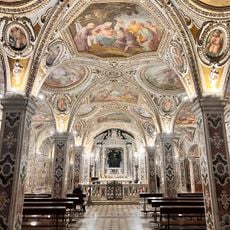
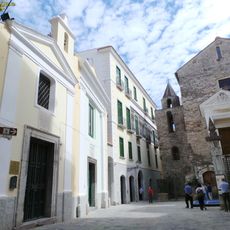
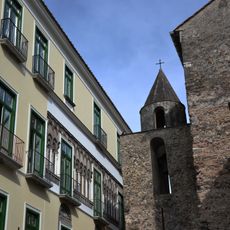
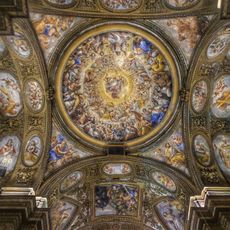
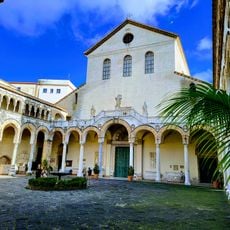
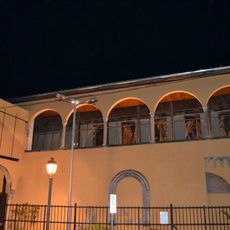
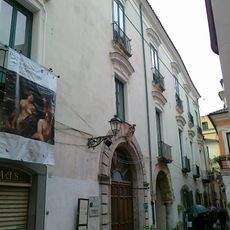
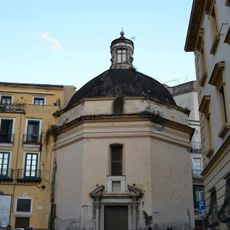
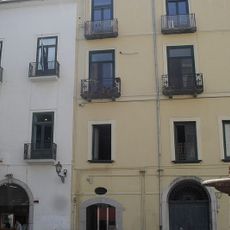
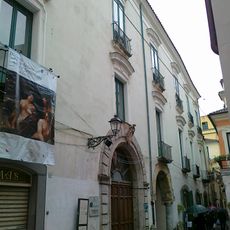
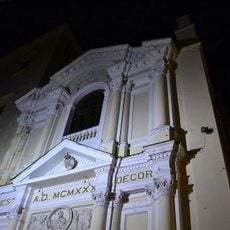
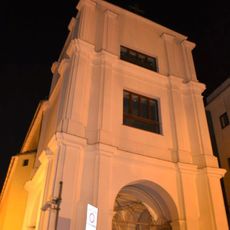
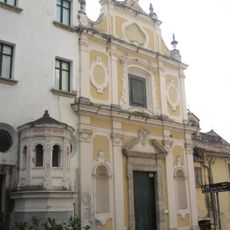
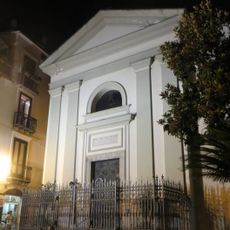
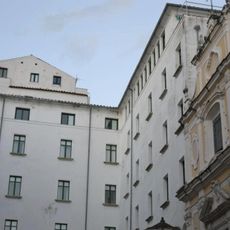
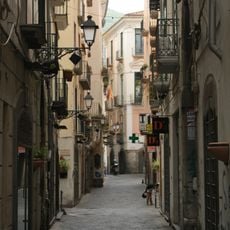
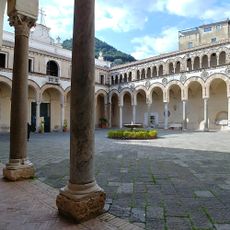
Tempio di Pomona, Roman temple at Archbishop's Palace, Salerno, Italy.
The Temple of Pomona stands within the Archbishop's Palace in Salerno and is a Roman structure featuring fifteen Corinthian columns. These columns are connected by a Gothic arch, and their capitals display four carved heads of the goddess Pomona.
Long thought to be a surviving Roman temple of Salernum, the hall is now seen as ancient spolia rearranged for ornament during a remodelling of the archbishop's palace. A plaque between the second and third monofora records a 4th-century AD donation of 50,000 sesterces by Titus Tettenius Felix Augustalis for marble floors, plaster and a pediment in an unidentified temple; Pomponio Leto transcribed it in the Vatican, and it may come from Ostia.
The name comes from the four female heads on the Corinthian composite capitals, traditionally read as Pomona; scholars now often identify them as the goddess Pax, taken from her temple at Paestum. The room is still called the Temple of Pomona and today hosts exhibitions and cultural activities.
The hall sits in the Archbishop's Palace on Via Roberto il Guiscardo, a short walk from Salerno Cathedral. It is part of the diocesan Curia and is used for exhibitions and cultural activities, so access depends on the events being held there.
The plaque between the second and third monofora records a donation of 50,000 sesterces by Titus Tettenius Felix, an Augustalis, in the 4th century AD, for marble floors, plaster and a pediment in an unidentified temple. No pediment exists in the hall, and humanist Pomponio Leto transcribed the stone in the Vatican, so it may come from Ostia.
The community of curious travelers
AroundUs brings together thousands of curated places, local tips, and hidden gems, enriched daily by 93,378 contributors worldwide.