Tenuta di Tombolo, Nature reserve and commercial forest in Pisa, Italy.
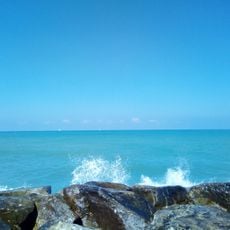
Tenuta di Tombolo is a nature reserve and managed forest situated between the Arno River and the coast, combining woodlands, agricultural areas, and coastal habitats. The estate encompasses diverse landscapes and ecosystems across its broad expanse.
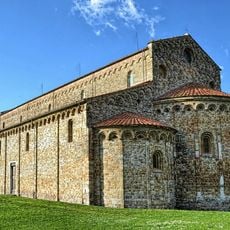
In Roman times the area was part of the wide Sinus Pisanus, a bay stretching from Versilia to Livorno, where the Portus Pisanus stood. The Arno then flowed into the sea near San Piero a Grado, a river landing whose Latin name gradus means landing place. The port later became the main naval and commercial base of the Republic of Pisa, until river sediments turned the bay into marshland and the harbour was moved south.
The name derives from the Latin tumulus, meaning a rise of the ground, because the land was built up from coastal dune ridges left by river sediments. The estate is also called Pineta del Tombolo, a name it shares with a different pinewood in the province of Grosseto. The alternation of dry raised tomboli and damp hollows called lame shaped its flora and fauna.
The estate spans about 5,000 hectares between the Arno River and the Scolmatore dell'Arno at Calambrone, crossed by the Canale dei Navicelli from Pisa toward Livorno. Its coastal strip holds Marina di Pisa, Tirrenia and Calambrone, while Camp Darby and the CISAM (ex CAMEN) military areas occupy parts of the interior. Check access before setting out, as large sections are military or farm land.
The 1947 film Tombolo, paradiso nero by Giorgio Ferroni and Alberto Lattuada's 1948 Senza pietà were both set in this pine forest, not in the Grosseto pinewood of the same name. After the war the woods sheltered smugglers, prostitutes and American deserters.
The community of curious travelers
AroundUs brings together thousands of curated places, local tips, and hidden gems, enriched daily by 94,184 contributors worldwide.