Piazza del Popolo, Central square in Ravenna, Italy.
Piazza del Popolo is a rectangular square in Ravenna featuring Venetian-style buildings with arched openings, stone pillars, and balconies running along its sides. The square houses the municipal building Palazzo Merlato, the Prefecture, and multiple banking institutions within these historic structures.
The square dates to the late 13th century, when the Da Polenta family took control of Ravenna and Bernardino da Polenta's residence, built on the banks of the Padenna river, became the political centre; the square was formed by widening the road in front of it. In 1444 the Venetians moved the municipal seat into a new "Venetian palace", and in 1483 they paved the square and raised two granite columns. In 1681 the Da Polenta palace was demolished and replaced by the present Palazzo Comunale.
The two granite columns came from the Venetians in 1483, topped by the Lion of Saint Mark and a statue of Saint Apollinaris. Ravenna residents tore down the lion in the 1530s, leaving one column bare for about a century. In 1639 the Community Council accepted a donation from the San Vitale monastery and in 1644 placed a statue of Saint Vitalis on the second column.
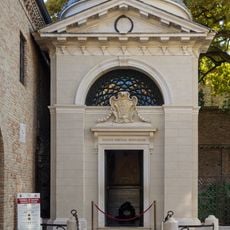
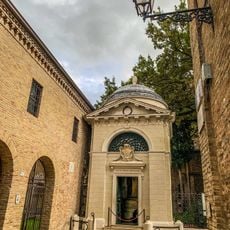
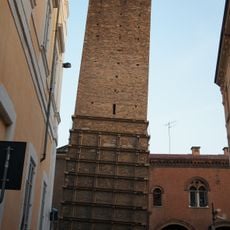
The square has been closed to vehicle traffic since June 1969, the first in Ravenna to be pedestrianised, so it is crossed on foot. Two covered passages, the voltoni, connect it to the Prefecture and to the area of Dante's tomb, visible through the arch next to the clock tower.
The two granite columns came from the demolished Church of Sant'Andrea dei Goti, near today's Rocca Brancaleone; their capitals are 6th-century carvings. The bases were made by sculptor Pietro Lombardo. The Venetians set the Lion of Saint Mark on one column in 1483; Ravenna's people pulled it down in the 1530s and the top stayed bare for about a century.
The community of curious travelers
AroundUs brings together thousands of curated places, local tips, and hidden gems, enriched daily by 94,131 contributors worldwide.