Synagogue, Neoclassical synagogue in Verona, Italy.
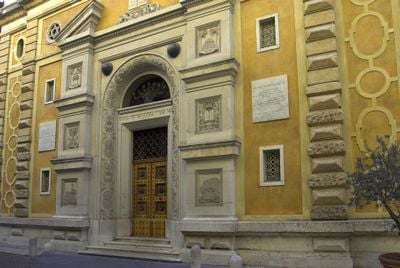
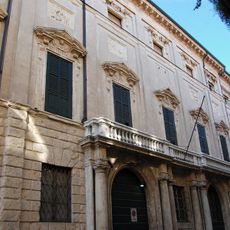
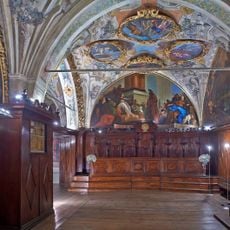
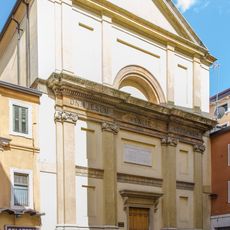
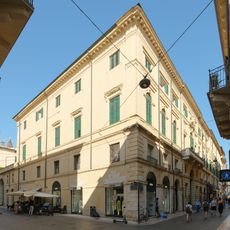
The Synagogue of Verona has a monumental ochre-yellow facade with white architectural elements, including a portal framed by two pilasters with six relief panels and topped by a sculpture of the Tablets of the Law. Inside, the large hall preserves 19th-century furnishings: a red marble aron from 1645 on the eastern wall facing Jerusalem, a tevah in front of it separated by a balustrade, and a women's gallery supported by red marble columns along the entrance wall.
Construction began in 1864 following a competition won by architect Giacomo Franco and engineer Mantovanelli to replace an earlier prayer chamber. A renovation in the early 20th century created the current facade facing Via Rosani after the demolition of an adjacent building altered the site's layout.
The name of the rabbi who commissioned the 19th-century project, Pardo, is remembered alongside architect Giacomo Franco. On the left side of the facade a plaque commemorates Rita Rosani, a Jewish partisan killed in September 1944 on the Veronese mountains, awarded the gold medal for military valour. Inside, the aron in red marble dates from 1645 and stands before the tevah, separated from the seating by a balustrade.
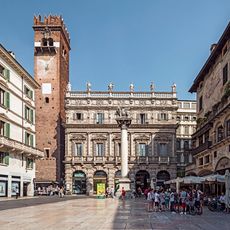
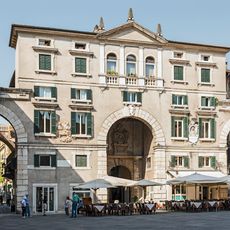
The synagogue stands at Via Portici 3, a short walk from Piazza delle Erbe in the former ghetto area. The prayer hall lies on the eastern wall, oriented toward Jerusalem, with the aron and tevah at the far end behind a balustrade; the women's gallery runs along the entrance wall on red marble columns.
The facade carries a memorial inscription to Rita Rosani, a Jewish partisan killed in September 1944 in the Verona mountains, awarded the gold medal for military valour. The red marble aron inside dates from 1645 and came from the earlier ghetto synagogue.
The community of curious travelers
AroundUs brings together thousands of curated places, local tips, and hidden gems, enriched daily by 93,783 contributors worldwide.